Showing posts with label environmental projects. Show all posts

Monday, 27 February 2012

Students' experiences: visiting Europe with Legambiente

Here we are with our second student's post. This time, our guest blogger is Sabina Tangorra, who's been traveling all around Europe with the Italian organization Legambiente (League for the Environment), the most widespread environmental organization in Italy. And here's her story...


Sabina Tangorra - Fine Art Student

My name is Sabina Tangorra, I'm 22 and I’ve been traveling abroad in the last few years taking part in volunteer camps organized by Legambiente.

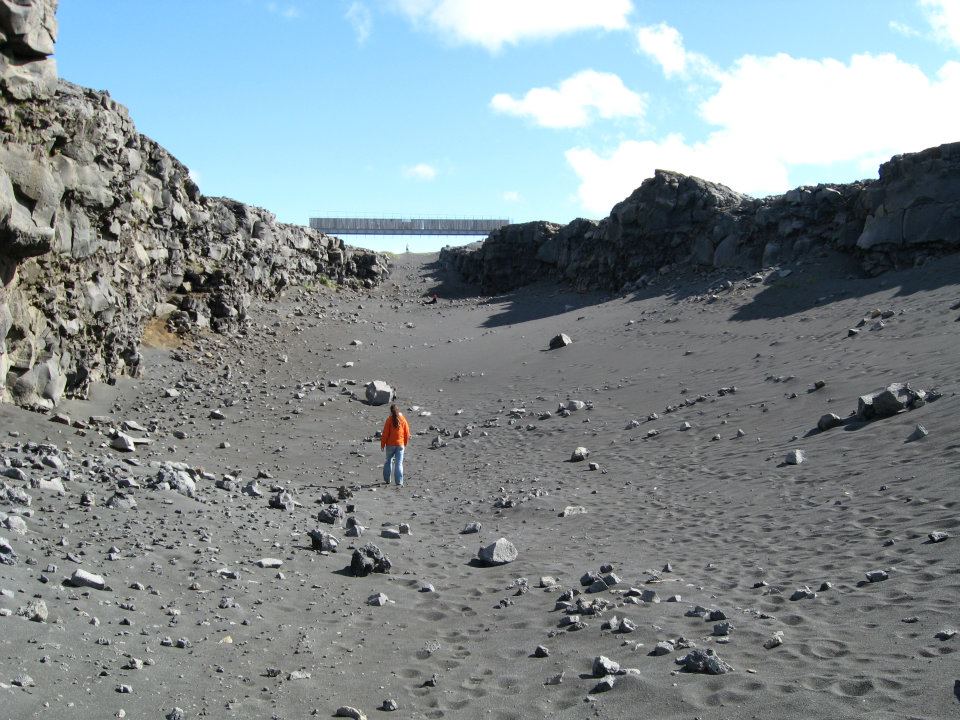
I visited Iceland - Keflavik, Reykjavik, Hafnarfjordur and Geyser, and Estonia - Tallinn and Loksa.

A volunteer work camp is an experience that can last for two or more weeks, in Italy or abroad. It allows you to travel, meet new people, improve language skills and above all enjoy the journey as a socially useful person, not as a simple tourist.

In a volunteer work camp participants share their hours of working, their accomodation and their free time with people coming from different realities and different countries.
So, you meet people that maybe in your everyday routine you would never have met. And you create very strong bonds, friendships that last a lifetime, and learn many new things.

A Legambiente camp can last from a minimum of 7 to a maximum of 30 days and around 4/6 hours of community work are scheduled during the week from Monday to Friday (social works, such as protection of nature or promotion of a healthy and eco-sustainable lifestyle).

Work hours are very light and rewarding, and you always have free time to explore the area, enabling you to live the volunteer camps as if they were a sort of alternative, but socially productive, holidays.
Food and accommodation are free, while participants have to pay for the journey. You also have to pay a contribution to the Legambiente organization.
In the camps the accomodation is usually in a school closed for holidays, or a guesthouse in the mountains ... it also happens to be hosted by local families.

in Keflavík


The only negative aspect - unfortunately, it often happens that upon arrival in a volunteer camp you realize that what was written in the information leaflet (especially about the job) is pure fantasy: I've often found out we had nothing to do, because the organization of the host country, to which Legambiente referred, did not know how to employ the volunteers ...

In 2008 I went to a camp in Iceland (that’s the one I remember with more than nostalgia, as I enjoyed it very much) and for a mistake (that still no one can explain) I and the other 8 people in the group were almost a week without work to be done.
In cases like this you have to look at the bright side of the situation: and ours was that we had plenty of time to visit the area.

Participation in a camp is an experience full of surprises, not all of them positive, but all useful for you personal growth. It is an experience I recommend with all my heart, because it is educational both for yourself as a person (it is not easy to roll up your sleeves and work/speak when no one around you speaks your language) and for interpersonal relationships, because it puts you in direct contact with strangers… that within a few days become your friends and share with you adventures and misadventures of a lifetime!
 ---

Mi chiamo Sabina Tangorra e da qualche anno il mio modo di viaggiare all’estero è partecipare ai campi di volontariato di Legambiente. Sono stata in Islanda, a Keflavik, Reykjavik, Hafnarfjordur e Geyser, ed in Estonia a Tallinn e Loksa.

Un campo di volontariato è un’esperienza lavorativa che può durare due o più settimane in Italia o all’estero, ti permette di viaggiare, conoscere persone nuove, migliorare la conoscenza delle lingue e soprattutto vivere il “viaggio” da persona socialmente utile e non da semplice turista.
In un campo di volontariato condividi le ore di lavoro, l’alloggio, il tempo libero con persone provenienti da realtà diverse dalla tua e che magari nella vita di tutti i giorni non avresti incontrato; si creano legami molto forti, amicizie che durano nel tempo e si imparano molte cose nuove.
Un campo di volontariato di Legambiente può durare da un minimo di 7 ad un massimo di 30 giorni e sono previste durante la settimana dal lunedì al venerdì circa 4/6 ore di lavoro socialmente utile (i lavori sono di carattere ambientale, come lavori di sentieristica o promozione di uno stile di vita sano ed eco-sostenibile ).
Il lavoro ha ritmi veramente rilassati e tranquilli e le ore libere per visitare i dintorni sono molte; questo permette di vivere i campi di volontariato come se fossero delle vacanze alternative.
Sono gratuiti il vitto e l’alloggio ma non il viaggio di andata e ritorno dal campo; inoltre per partecipare è necessario versare un contributo di 120 euro a Legambiente ed avere la tessera.
Nei campi l’alloggio spesso e volentieri è una scuola chiusa per le feste o una foresteria in mezzo alle montagne … Capita anche di essere ospitati dalle famiglie del posto.
Purtroppo accade spesso che all’arrivo in un campo di volontariato ci si accorga che quel che è stato scritto nella scheda informativa (soprattutto il lavoro da svolgere) è pura fantasia: mi è capitato spesso di trovarmi “con le mani in mano” perché l’organizzazione del paese ospitante a cui la Legambiente faceva riferimento non sapeva cosa far fare ai volontari …
Nel 2008 sono andata ad un campo di volontariato in Islanda (è quello che ricordo con più nostalgia, mi sono divertita molto) e per un disguido (che ancora nessuno sa spiegare) io e le altre 8 persone del gruppo siamo rimasti quasi una settimana senza lavoro da svolgere.
In casi del genere conviene vedere i lati positivi della situazione ed il nostro è stato di avere molto tempo a disposizione per visitare la zona.
Partecipare ad un campo di volontariato è un’esperienza ricca di sorprese non sempre positive, ma è comunque un’esperienza che consiglio con tutto il cuore, perché è formativa sia per il carattere (non è facile rimboccarsi le maniche ed arrangiarsi quando nessuno intorno a te parla la tua lingua) che per i rapporti interpersonali, perché ti mette a confronto diretto con persone sconosciute che nel giro di pochi giorni diventano tue amiche e condividono con te avventure e sventure.

Monday, 5 April 2010

Monday, 19 October 2009

Big man keep our world clean!


Our preschoolers have made a poster designs that represent Earth in the future. Their messages were written by educators, that "we are small, but our designs we want to speak on our behalf.
Children want to live in a clean environment and peace. They call the big man to keep the world clean for the followers.

Big man keep our world clean!

Thursday, 15 October 2009

Blog Action Day 2009: Climate Change - it's time to take action!


Today at school we talked about the problems connected with climate change. And we created posters and slogans against it. We think the people with power have to change things soon. And people with the power to vote and to protest have to convince them to act NOW !!!
Samira Varallo, Alessia Spedale, School "Arnolfo di Cambio" Casole d'Elsa


Blog Action Day 2009: Drawings against the Climate Change


Valeria Labruna, Agata Leal, Matteo Caiazzo & Nicola Mazur, Jacub Lysakowsky & Mattia Caliò
http://www.blogactionday.org/


School "Arnolfo di Cambio" Casole d'Elsa


A game for your class


« The Greenhouse effect »
« The climate changes! What about you? »

Play-action in class.

The teacher:

1. Paints the Earth on the blackboard.
2. Puts a globe on a chair in the middle of the class.
3. Places the chairs for the pupils around the globe in Π formation.
4. Have colored chalks, sponges and cellophane (one transparent and two orange-colored).
5. Brings photos from factories, arid soil, wind generators…

Action

Teacher:
We shall study a type of energy, which we use in our house… because we have many… appliances and then we receive a…huge bill!
What type of energy is it?
Pupils:
Electricity.
Teacher:
What electrical appliances can you think of? (Brainstorming)
Pupils:
Refrigerator, washing machine…
Teacher:
Come and write them around the earth on the board.
I΄ll begin.
(He writes refrigerator and paints three small clouds with CO2 - Carbon Dioxide inside).
· The first cloud-CO2 comes from the factory which produced the refrigerator.
· The second cloud-CO2 is for the automobile which carried the appliance home and
· The third one stands for the CO2 that is produced when the power plant uses lignite.
(The teacher gives the chalk to a pupil. Then the whole class takes turns in drawing electrical appliances and clouds around the globe following the above-mentioned procedure)

Teacher:
-I will explain what is happening here in a few minutes.
(The teacher approaches the globe in the middle of the class, handing the transparent cellophane and explaining).
1. If a planet lacks atmosphere, its temperature rises during the day. But at night it is very-very low because heat escapes into space.
2. If a planet has atmosphere like the Earth, (he extends the transparent cellophane around the Globe slowly), temperature rises during the day. But at night it doesn’t fall very much because the atmosphere withholds parts of the heat, so it’s friendly for life. This is called:

“The Greenhouse Effect”
And it is very good for us!!! And our life!!!
3. As far as the gas that is called carbon dioxide (CO2) is concerned, we must keep in mind that … it can withhold a lot of heat. So all these clouds around the Earth can trap large amounts of heat (the teacher slowly unfolds the orange-colored cellophane around the Globe), and the temperature of our planet keeps rising … (He extends the second orange cellophane slowly) and…The Greenhouse Effect increases continuously. (He shows relevant pictures saying):
4. -The climate changes…
5. -Αrctic ice melts…2007 is IPY: international polar year…
6. -Desert expands…
(The teacher takes a sponge, approaches the globe and embraces it)
· -Our planet is getting hotter and hotter!!!
· -Just like us, during summer time, when we enter our car after a bath in the sea!!!
· What can we do? What is your opinion? (Brainstorming)

Pupils:
(The teacher listens to their opinions. He might give them a little boost if necessary.)
-Turn the lights off before leaving the room
-Turn the tap off while brushing our teeth
-Plant trees as they absorb the CO2
-Walk more
-Use bags made of cloth instead of plastic ones
-Use green and renewable sources of energy: solar, wind, waves…

Teacher:
So you suggest:
1. Conserving Energy!!!
2. Green-Renewable Energy!!!
Ok. Very good!
Look what I am going to do and then you will continue…
(The teacher, holding a sponge on his hand, touches the Globe and gives a promise :)
· I will come on foot at school every morning!
· I will not use my car so I will not send exhaust-gases out in the atmosphere…so I may …rub out …some clouds around our Earth!!!
(The teacher erases some clouds from the board and stretches his hand with the sponge to a pupil)
· It’s your turn now…

(Every pupil, takes the sponge, touches the Globe, gives a promise, rubs out some clouds and gives the sponge to another pupil…
So when the earth on board is completely clean as it was in the beginning the teacher asks:
Are we going to leave our earth covered?
(He slowly uncovers the globe from the orange cellophane and leaves the transparent one-Atmosphere).

-Our planet is happy now!!!
- We can help our Earth by making minor changes in our everyday routine!!!
-We deserve a big applause!!!

Bibliographie : http://www.cres.gr/ http://www.windday.eu/ http://www.managenergy.net/

At home:
Each student can draw renewable sources of energy:

Solar - wind - geothermic - hydroelectric - of waves - tidal

Or verbs in the imperative form:

Turn off - walk - plant - change - recycle - decide…

And then they can place the projects on the announcement board in their classroom.

Stop the climate change!


Matteo Casati & Clara Pini, Samira Varallo & Vanessa Pelosi, Gianluca Ventura, Hiroshi Yuki Ionut Dragomir, Valerio Mansueto & Livia Salvini: our slogans against the climate change!
School "Arnolfo di Cambio" Casole d'Elsa, Italy

Wednesday, 14 October 2009

15/10/2009!

Hello partners,

tomorrow is the day of "Climate change"

if you want have a look at:

http://www.blogactionday.org/

Marika