Showing posts with label students' experiences. Show all posts

Thursday, 13 March 2014

eTwinning: the educational fandom?

A couple of weeks ago I had the happiest reunion ever with friends from the US.
We sat in a bright spot of Piazza del Campo, had tea and cakes at a lovely Café, and basically kept chatting all together all the time.

There was a lot to catch up with - say, the last five years of our offline lives. We happen to be teachers, all of us. So after a quick overview on husbands/kids&pets, the conversation immediately turned to ‘The Topic’: school. We had a good time laughing at the tricks of our students (or admiring them), comparing our school lives – not so different after all, and trying to conjure up projects and ideas to work together despite the distance.
Yes, definetely having a good time.
That is, until Tina asked me "So, what’s this eTwinning you’ve fallen head over heels for?"
Pang of disillusion - I could remember talking about this before hundreds of times. But obviously being not that convincing. However. Enthusiastic and proud, as a good Ambassador is supposed to be, I proceeded to describe eTwinning, its opportunities, its world, its projects, its potential. I paid attention not to be boring, so I tried to sum it up in less than 15 minutes. And put all of my energies smiles and jokes in it, as usual.
When I got to the end there was a pause.The girls looked at each other, then Tina said “I see. Sort of an educational fandom.”

Had we been in an online conversation, I would have probably taken it as an offence – or at least a verrrry negative remark. But we were sitting face to face, drinking tea and laughing and eating ricciarelli… and it was clearly impossible something less than nice was meant. [Note for Italian readers: I know, ricciarelli don’t go with tea and don’t go with this time of the year. Still, foreigners love them all year round, and I do as well.]

So, while hordes of Little Monsters, Directioners and Selenators came to my mind, I kept my cool and smiled the subject away, taking a mental note of googling “fandom” as soon as I got home.
The day turned out to be one of those you want to keep among your best memories. One of those you keep referring to in emails, in your facebook status, in your tweets, for years – that is to say, till the next face to face reunion.


But I couldn’t forget the fandom thing… 
That same night I sat in front of my pc reading about fandoms in Wikipedia. And here it is (I quote the beginning of the article, but if you’ve got time, read it to the end, some aspects are truly interesting in an educational perspective):

Fandom (consisting of fan [fanatic] plus the suffix -dom, as in kingdom, freedom, etc.) is a term used to refer to a subculture composed of fans characterized by a feeling of sympathy and camaraderie with others who share a common interest. Fans typically are interested in even minor details of the object(s) of their fandom and spend a significant portion of their time and energy involved with their interest, often as a part of a social network with particular practices (a fandom); this is what differentiates "fannish" (fandom-affiliated) fans from those with only a casual interest. A fandom can grow up centered around any area of human interest or activity. The subject of fan interest can be narrowly defined, focused on something like an individual celebrity, or more widely defined, encompassing entire hobbies, genres or fashions.

Ok. Less intimidating than I thought. And now I know I’m in a lot of fandoms myself, even if I seldom used this word before. I’m actually a pretty active Whovian and Ringer, a Trekkie and even if I am maybe too old to be one, I think I could make a decent Potterhead.

But what has this to do with school? and with eTwinning in particular?

Well, to be honest I must say I saw the connection almost immediately
.
However, I quickly moved to the next step. That same night I launched an online survey involving most of the ex-students I have among my fb contacts (I don’t want any current students among them, but that’s only my personal policy, plus my students are 11-14, so formally too young for fb). I told them I was working on a research and asked them to name their fandoms: no explanation given, no other info.
I expected few replies and lots of “dunno”. But that was not what I got.
Out of around 120 students, an average 80% answered, and all of them could name at least a couple of fandoms they are involved with, mainly dealing with sci-fi or fantasy sagas (i.e. reading !!!!), tv series, and bands or singers.
Not too difficult to see the educational potential of these fan worlds. It looks like our students spend a lot of time reading, watching, writing about (even dressing up as) characters and stories they feel they can relate to. They discuss the story, they imagine alternative endings, they interact and learn from each other, no teacher involved.
I am sure we, as teachers, could and should work with all of this potential. Which doesn’t mean entering their worlds, but we make the effort to get to know them at least, and try to take advantage of this huge self practice and this huge involvement.

And as for eTwinning? is it an educational fandom, after all? I suppose the answer is yes, it is.

It’s a part of our professional life, true, and we enter it as professionals. But how and why do we go on? Why are we still eTwinners after five, six years or more? Why are we still part of this world?
I used to say: because it works. Projects work with students: they learn. Which is great. But it’s not all here. After years, we apparently don’t get bored of the same tool. So why are we still in eTwinning? isn’t it because of the people as well? isn’t it because of the social network? because of the conferences, seminars, events that allow us to meet each other? (could we call them fandom conventions?) isn’t it because of the games we make up, the groups we created on other socials, the “educational family” we’ve been building together?
Just like our students, we work for free, out of passion and curiousity: they read their stories, they write their essays on, say, Katniss Everdeen, without any assignments, we read and write our eTwinning articles on thenewTwinSpace/ thebugsofthenewTwinSpace/ theTeachersRoomspotential/ theeTwinningAwards and we post in TRs, blogs and forums without being paid for and without being forced to do so. Because we like it.
Both categories – the students and the teachers – act as learners in this process. We learn by discussing something we like with someone we like. That’s all.

And while we are not exactly fangirling or shipping eTwinning couples, it’s true that eTwinners also have their own slang. Plus, I must admit I share with Monika Kiss some nice memories of eTwinning cosplay and even some fan fiction writing...

So, thank you Tina and girls. After much thinking about it, I like this idea of the educational fandom, with its pros and cons of course. I’ll be thinking about it some more. And I’ll be working on this, for sure. Definitely, there’s a lot more to come, lots of worlds to explore. Friends and colleagues of the eTwinning fandom, keep on board.

[and yes... it's actually bigger on the inside :)]

Monday, 5 March 2012

Students' experiences: eTwinning, Comenius.. and lasting on-line friendship


Lucrezia Frati - Martina Spedale
students at Liceo Psicopedagogico
 Hello everybody, I'm Lucrezia from Italy.
My European experience has been with eTwinning, in Lower Secondary School.
I think first of all eTwinning has allowed us all to find a school to work with: our Partner Country was Hungary, for the children of other classes the Partner Countries were Spain, Slovakia and Turkey, in previous years there were the Czech Republic, Cyprus, and many others.
We can say that in the last six years, our city has been traveling all the time throughout Europe with eTwinning!
If I were to give a reason why to try eTwinning, I'd say it's fun, it is never boring, and you meet new people and new places.
In our project, "BE TWIN", we worked in pairs with the Hungarian students. In a sense, eTwinning made us feel the subjects we studied as "new" and more engaging; instead of the "normal" lesson, we could use new programs, write on the internet, chat and meet people from other countries.
We also created a facebook page to go on meeting with our partners.
The best part, of course, was to meet them in person.
I think eTwinning for me is also a way to fight shyness, because it teaches us how to speak in foreign languages​​ with people who otherwise we would never have known. We learn not be afraid to turn to someone new, even when it is very far from us.

And then eTwinning is also a way to learn to fend for yourself and solve problems without always going to the teacher, using the computer, your partners' help, and foreign languages​​. If there is a difficulty, no drama, just work hard... and have fun!
---

I'm Martina from Italy and I took part in the same project as Lucrezia. We were in the same class in Lower Secondary school and we are together also in "Liceo" as we chose the same High School. I hope we'll have European adventures here too.
One thing I liked in eTwinning is the use of new technologies, working in groups. Three years ago we were already pretty familiar with computers, but then we improved a lot. All the work we did was based on the use of computers in an imaginative and original way. This can be useful to make lessons more enjoyable every day and learn faster.
Our Hungarian partners also won an award for the use of the digital whiteboard.
For us the Municipality, also thanks to our commitment to eTwinning, has managed to create a beautiful and efficient new school, with digital boards in every classroom. This happened because the Mayor has realized and appreciated what we were doing: we had so many contacts in Europe, so we needed appropriate technologies.
My partner in the project was Edit, and we still are friends, we met in October in person, and we meet almost every day on facebook. So, thanks eTwinning!
---

Orsolya Csebella
Hello everybody, I'm Orsolya from Hungary. Together with other students who chose to study Italian at the István Orczy Általános Iskola of Szeged, Hungary. I took part in many eTwinning projects. The one I like most is "BE TWIN – twinning up the everyday lesson”.

In the project’s activities, we used lots of web tools. I liked PhotoFunia for example, to edit photos in a fun way, and Voki to create speaking avatars.
We all have a Twin. My Twin is Lule, Lucrezia.
We wrote letters to each other, created poems and drawings, worked together on google docs, and had fun! Now, after more than three years, we still go on meeting, on eTwinning and on facebook.
My favourite activity was when we wrote a poem together on Friendship. We Hungarians wrote the first part of the poem, and our Italian friends had to finish them.
Thank to the project, we could go the Tiszafüred and Eger camp in Hungary to try out lots of innovative web tools. Later we were invited with our Twins to the Budapest conference. It was very nice to meet and get to know each other in person. We met again last fall when we visited Italy in a Comenius project. I liked meeting Lucrezia and the others again, and spending some time together. I hope I’ll be able to travel again in the future. And I want to go on studying languages.
Hooray for Comenius and eTwinning because that's how we met our friends!

Monday, 27 February 2012

Students' experiences: visiting Europe with Legambiente

Here we are with our second student's post. This time, our guest blogger is Sabina Tangorra, who's been traveling all around Europe with the Italian organization Legambiente (League for the Environment), the most widespread environmental organization in Italy. And here's her story...


Sabina Tangorra - Fine Art Student

My name is Sabina Tangorra, I'm 22 and I’ve been traveling abroad in the last few years taking part in volunteer camps organized by Legambiente.

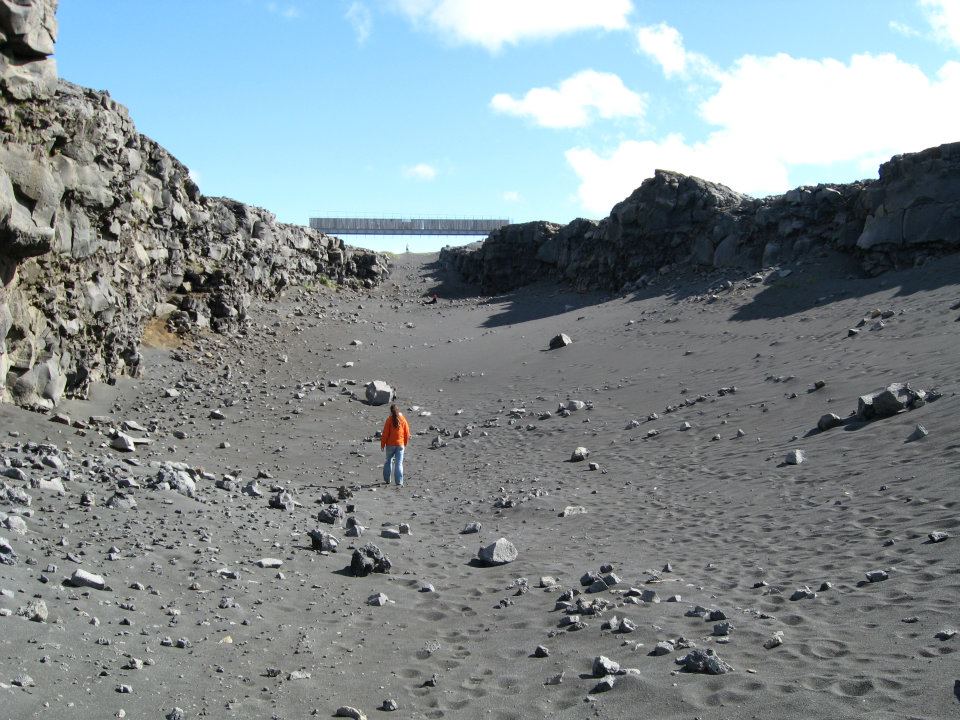
I visited Iceland - Keflavik, Reykjavik, Hafnarfjordur and Geyser, and Estonia - Tallinn and Loksa.

A volunteer work camp is an experience that can last for two or more weeks, in Italy or abroad. It allows you to travel, meet new people, improve language skills and above all enjoy the journey as a socially useful person, not as a simple tourist.

In a volunteer work camp participants share their hours of working, their accomodation and their free time with people coming from different realities and different countries.
So, you meet people that maybe in your everyday routine you would never have met. And you create very strong bonds, friendships that last a lifetime, and learn many new things.

A Legambiente camp can last from a minimum of 7 to a maximum of 30 days and around 4/6 hours of community work are scheduled during the week from Monday to Friday (social works, such as protection of nature or promotion of a healthy and eco-sustainable lifestyle).

Work hours are very light and rewarding, and you always have free time to explore the area, enabling you to live the volunteer camps as if they were a sort of alternative, but socially productive, holidays.
Food and accommodation are free, while participants have to pay for the journey. You also have to pay a contribution to the Legambiente organization.
In the camps the accomodation is usually in a school closed for holidays, or a guesthouse in the mountains ... it also happens to be hosted by local families.

in Keflavík


The only negative aspect - unfortunately, it often happens that upon arrival in a volunteer camp you realize that what was written in the information leaflet (especially about the job) is pure fantasy: I've often found out we had nothing to do, because the organization of the host country, to which Legambiente referred, did not know how to employ the volunteers ...

In 2008 I went to a camp in Iceland (that’s the one I remember with more than nostalgia, as I enjoyed it very much) and for a mistake (that still no one can explain) I and the other 8 people in the group were almost a week without work to be done.
In cases like this you have to look at the bright side of the situation: and ours was that we had plenty of time to visit the area.

Participation in a camp is an experience full of surprises, not all of them positive, but all useful for you personal growth. It is an experience I recommend with all my heart, because it is educational both for yourself as a person (it is not easy to roll up your sleeves and work/speak when no one around you speaks your language) and for interpersonal relationships, because it puts you in direct contact with strangers… that within a few days become your friends and share with you adventures and misadventures of a lifetime!
 ---

Mi chiamo Sabina Tangorra e da qualche anno il mio modo di viaggiare all’estero è partecipare ai campi di volontariato di Legambiente. Sono stata in Islanda, a Keflavik, Reykjavik, Hafnarfjordur e Geyser, ed in Estonia a Tallinn e Loksa.

Un campo di volontariato è un’esperienza lavorativa che può durare due o più settimane in Italia o all’estero, ti permette di viaggiare, conoscere persone nuove, migliorare la conoscenza delle lingue e soprattutto vivere il “viaggio” da persona socialmente utile e non da semplice turista.
In un campo di volontariato condividi le ore di lavoro, l’alloggio, il tempo libero con persone provenienti da realtà diverse dalla tua e che magari nella vita di tutti i giorni non avresti incontrato; si creano legami molto forti, amicizie che durano nel tempo e si imparano molte cose nuove.
Un campo di volontariato di Legambiente può durare da un minimo di 7 ad un massimo di 30 giorni e sono previste durante la settimana dal lunedì al venerdì circa 4/6 ore di lavoro socialmente utile (i lavori sono di carattere ambientale, come lavori di sentieristica o promozione di uno stile di vita sano ed eco-sostenibile ).
Il lavoro ha ritmi veramente rilassati e tranquilli e le ore libere per visitare i dintorni sono molte; questo permette di vivere i campi di volontariato come se fossero delle vacanze alternative.
Sono gratuiti il vitto e l’alloggio ma non il viaggio di andata e ritorno dal campo; inoltre per partecipare è necessario versare un contributo di 120 euro a Legambiente ed avere la tessera.
Nei campi l’alloggio spesso e volentieri è una scuola chiusa per le feste o una foresteria in mezzo alle montagne … Capita anche di essere ospitati dalle famiglie del posto.
Purtroppo accade spesso che all’arrivo in un campo di volontariato ci si accorga che quel che è stato scritto nella scheda informativa (soprattutto il lavoro da svolgere) è pura fantasia: mi è capitato spesso di trovarmi “con le mani in mano” perché l’organizzazione del paese ospitante a cui la Legambiente faceva riferimento non sapeva cosa far fare ai volontari …
Nel 2008 sono andata ad un campo di volontariato in Islanda (è quello che ricordo con più nostalgia, mi sono divertita molto) e per un disguido (che ancora nessuno sa spiegare) io e le altre 8 persone del gruppo siamo rimasti quasi una settimana senza lavoro da svolgere.
In casi del genere conviene vedere i lati positivi della situazione ed il nostro è stato di avere molto tempo a disposizione per visitare la zona.
Partecipare ad un campo di volontariato è un’esperienza ricca di sorprese non sempre positive, ma è comunque un’esperienza che consiglio con tutto il cuore, perché è formativa sia per il carattere (non è facile rimboccarsi le maniche ed arrangiarsi quando nessuno intorno a te parla la tua lingua) che per i rapporti interpersonali, perché ti mette a confronto diretto con persone sconosciute che nel giro di pochi giorni diventano tue amiche e condividono con te avventure e sventure.

Wednesday, 22 February 2012

Students' experiences: our first guest blogger

Do you remember our call for contributors of last January? Well, here's our first guest blogger. So, let's welcome  Fabióla!

Fabióla Csuka - University student
My name is Fabióla Csuka, I’m twenty years old and I come from Hungary.


I started studying Italian in my elementary school in Szeged. This school is István Orczy Elementary School. There was a study group once a week. In this study group I learned the basics of the language, we studied Italian songs, the alphabet, the numbers, the first simple things. With this knowledge I could study Italian in secondary school very easily.

In elementary, and secondary school too, there were competitions, where we could meet other students. Yearly there was a nationwide competition, where I entered for the category of poem, but there were other categories. In my elementary school every year there was the competition of Gianni Rodari, it was a tradition. Students of the schools of Szeged took part in this competition.

In this school we started an eTwinning project, called „Sharing our world – Condividere il mondo”, with the Italian school “Arnolfo di Cambio”. It was very funny, because we exchanged letters and emails with Italian students. It was a very big adventure, because we could practice the language with real Italian people. I studied and it was a very good feeling that I had Italian friends.

In my elementary school there was an opportunity to go to Italy several times, and it was very important in my life, because I could see the country, the people, the culture, and I could practice the language. At first it was very difficult to speak in Italian, but after the first success I became more courageous, and I was very happy when people understood me.

At this moment I decided that I want study in Italian at the University, too. I liked the people, the country, the temperament of the country, and I was sure that I want to deal with the Italian language later, too.

Once we also could go to Switzerland, it was a great experience. In Switzerland I could use the Italian language again, yet more easily.

Then in the secondary school I could go on with the study of the italian language, already three times a week. It was simple with my knowledge, and I didn’t need to start again. Every year I entered for the nationwide Italian competiton, called the Festival d’Italiano, in the category of prose. It was easier with the experience that I had in the competitions in my elementary school. Once I won this competition, and I was recognised by a lot people.

Now I am studying at the University of Szeged from September, in the Italian department. It’s very good, I enjoy it! I would like to study in Bologna with the Erasmus programme. It would be fantastic, because I could live nearly one year in Italy, I will deeply know the country, the culture, the traditions. I will meet a lot of Italian people, and I ’ll be able to use the language.

I can’t wait!
---

Az Orczy István Általános Iskolában kezdtem el olaszul tanulni, Szegeden. Heti egy órában, szakkör keretein belül, ahol a nyelv alapjait tudtam elsajátítani.

Minden évben megrendezte az iskola a Gianni Rodari versenyt, amely egy hagyomány volt, és szegedi diákok vettek részt rajta. Ezen kívül évente megrendeztek egy országos versenyt, ahová az ország minden részéből érkeztek diákok. Én vers kategóriában indultam ezeken a versenyeken.
Az iskolával bekapcsolódtunk az eTwinning programba is, a mi akkori programunk neve Sharing our world – Condividere il mondo volt, és az Arnolfo di Cambio nevű olasz iskolával álltunk kapcsolatban. Ez nagyon jó volt, mert olasz diákokkal tudtunk levelezni, így is gyakorolva a nyelvet, és igazán jó érzés volt, hogy vannak olasz barátaink.
Többször volt lehetőségünk eljutni Olaszországba, ami mindig hatalmas élmény volt. Először nem volt könnyű megszólalni, de az első sikerek után egyre bátrabb lettem, és igazán boldog voltam, amikor megértették az emberek, amit mondani akartam. Megismerhettük magát az országot, láthattuk az embereket, a kultúrába bepillanthattunk. Ekkor döntöttem el, hogy olaszul szeretnék tanulni az egyetemen is később.
Megtetszettek az emberek, az ország, a temperamentum, és biztos voltam benne, hogy az olasz az, amivel később is foglalkozni szeretnék.
Egyszer eljutottunk Svájcba is, ami szintén remek lehetőség volt arra, hogy használjuk a nyelvet, immár sokkal könnyebben.
A középiskolában folytattam az olasz nyelv tanulását, és szerencsére nem kellett mindent elölről kezdenem a megszerzett alapoknak köszönhetően. Szintén évente rendezték meg az országos olasz versenyt, melynek neve Festival d’Italiano. Minden évben elindultam rajta, próza kategóriában, amely nem volt olyan nehéz az általános iskolában gyűjtött tapasztalatoknak köszönhetően.
Most a Szegedi Tudományegyetem olasz szakán tanulok szeptember óta. Erasmus programmal szeretnék egy évet Bolognában tanulni. Ez nagyon jó lesz, mivel majdnem egy évig fogok Olaszországban élni, igazán megismerhetem az országot, az embereket, a kultúrát. Rengeteg lehetőségem lesz, hogy gyakoroljam a nyelvet az olasz diákokkal. Már nagyon várom!