I built myself a house of glass:
It took my years to make it:
And I was proud. But now, alas!
Would God someone would break it.
...
Edward Thomas
Sometimes I wonder how many teachers, especially at secondary level, still live in their personal “house of glass”, still feeling proud of it.
Maybe in the past you could call them “good teachers”: after all, they do care about their students, they spend much of their out-of-school time to prepare tests, correct them, make up new exercises, they make polite conversation with their colleagues and… they are desperately isolated.
But in a time of global crisis, with more and more unemployed families, with growing social tensions all around Europe, with schools lacking money for ICT equipment/ substitute teachers/ books/ paper / younameit, with misinformation often running through the web, at easy reach of our students… isolated teachers cannot be “good” enough anymore. They have to collaborate and share. They have to teach themselves how to become good partners.
I think eTwinning is the ideal starting point for this. Projects, Teachers’ Rooms, Learning Events, Workshops and seminars are the European meeting point for individuals who are willing to share in their profession and in their life, and become members of a community.
I thank all of those teachers who lured me in eTwinning - and in Europe - and let me try to be a good partner for them as they were for me. I’m proud of giving up my house for a condo!
I thank all of the eTwinners who contributed to this ebook, thus giving evidence of what being “partners across Europe” really means.
And I thank Mrs Fiora Imberciadori, who was the first to make me understand - and care about - what being an European citizen and teacher could mean to me.
Showing posts with label EU. Show all posts
Showing posts with label EU. Show all posts
Monday, 29 April 2013

Sunday, 10 February 2013
Zen and the Art of Teachers' Rooms Manteinance
Hi everybody, I'm sharing this time a great resource we created together during the eTwinning Learning Event "eTwinners go social: creating and managing a successful Teachers' Room".
I ran the Learning Event in December 2012, together with a great team of co-managers: Antonella Ciriello, Elena Pezzi, Maria Rosaria Fasanelli, PAola Arduini and Monika Kiss.
It was a wonderful thrilling experience, not only for what we taught and learned concerning Teachers' Rooms and our place in the eTwinning geography, but also because, once more, we experienced the power of teams.
And then, it was a special experience because of the people we had the opportunity to meet.
Believe me, whatever you are doing, if you do it together it will come out a lot better - often in an unespected direction.
This time, together with the participants, we decided to share our reflections and opinions with a wider public of eTwinners - and not only. We believed our ideas, tips and suggestions should go further than the closed space of the Learning Lab.
That's why, at the end of our journey, we created this Teachers' Rooms Handbook.
Have fun everybody, keep on travelling the eTwinning world, keep on sharing, meeting, imagining, chatting, teaching and learning...
A big THANK YOU to all of the contributors, enjoy your handbook
Laura
I ran the Learning Event in December 2012, together with a great team of co-managers: Antonella Ciriello, Elena Pezzi, Maria Rosaria Fasanelli, PAola Arduini and Monika Kiss.
It was a wonderful thrilling experience, not only for what we taught and learned concerning Teachers' Rooms and our place in the eTwinning geography, but also because, once more, we experienced the power of teams.
And then, it was a special experience because of the people we had the opportunity to meet.
Believe me, whatever you are doing, if you do it together it will come out a lot better - often in an unespected direction.
This time, together with the participants, we decided to share our reflections and opinions with a wider public of eTwinners - and not only. We believed our ideas, tips and suggestions should go further than the closed space of the Learning Lab.
That's why, at the end of our journey, we created this Teachers' Rooms Handbook.
Have fun everybody, keep on travelling the eTwinning world, keep on sharing, meeting, imagining, chatting, teaching and learning...
A big THANK YOU to all of the contributors, enjoy your handbook
Laura
Monday, 27 August 2012
eTwinning e la realtà - Europe Calling
Summer - as we said in another post, for a teacher it's time for friends, relax, holidays, and edu tech !
True, we couldn't stop exploring the web & meeting online, and given more time, lots of us eTwinners spent the hot afternoons trying out new tools, planning future projects and devising new ways to spread our ideas and experiences throughout Europe.
And, as for us...
The 'eTwinning e la realtà' teachers' room went on being our meeting point, and that's where Antonella first got the crazy idea of a multilingual issue of our e-magazine. "We can translate our articles... we can ask our partners for help... we will help each other... we will make it!"
We were a bit anxious at first, but she was right - we could definitely rely on the eTwinners' skills in collaboration.
So, a group of enthusiastic/crazy teachers spent some of their summer translating the articles, laughing when they got mixed up or when they needed some funny periphrasis because "I can't find the word", asking each other for help, and chatting a lot. We were thrilled: we could get in contact with teachers from different countries, going beyond the national dimension.
Here's the outcome of our summer collaboration: a special multilingual issue of the "eTwinning e la realtà" emagazine, with articles in English, Hungarian, French & Italian.
That's our eTwinning gift to celebrate the new school year.
We hope other eTwinners, throughout Europe, will read our stories and find them useful and inspiring.
And we hope we'll go on collaborating, and widening our circle.
I thank all of the teachers who created the ebook.
Welcome back to school everybody... enjoy our new emagazine!
True, we couldn't stop exploring the web & meeting online, and given more time, lots of us eTwinners spent the hot afternoons trying out new tools, planning future projects and devising new ways to spread our ideas and experiences throughout Europe.
And, as for us...
The 'eTwinning e la realtà' teachers' room went on being our meeting point, and that's where Antonella first got the crazy idea of a multilingual issue of our e-magazine. "We can translate our articles... we can ask our partners for help... we will help each other... we will make it!"
We were a bit anxious at first, but she was right - we could definitely rely on the eTwinners' skills in collaboration.
So, a group of enthusiastic/crazy teachers spent some of their summer translating the articles, laughing when they got mixed up or when they needed some funny periphrasis because "I can't find the word", asking each other for help, and chatting a lot. We were thrilled: we could get in contact with teachers from different countries, going beyond the national dimension.
Here's the outcome of our summer collaboration: a special multilingual issue of the "eTwinning e la realtà" emagazine, with articles in English, Hungarian, French & Italian.
That's our eTwinning gift to celebrate the new school year.
We hope other eTwinners, throughout Europe, will read our stories and find them useful and inspiring.
And we hope we'll go on collaborating, and widening our circle.
I thank all of the teachers who created the ebook.
Welcome back to school everybody... enjoy our new emagazine!
Sunday, 26 August 2012
EU citizens - Your rights, your future: consultation on the 2013 EU Citizenship Report
 It is difficult to talk about the EU today without feeling sad, or at least concerned. To be honest, the EU we live in today is quite different from the one we dreamt of 20 years ago. I remember the excitement and the hopes after the Maastricht Treaty. Now, I know many EU citizens will say the Treaty (which led to the introduction of the Euro) was the beginning of the end.
That's why I believe it's our duty, as European citizens, to take part in the public consultations promoted by the EU: when our opinion is asked, we have to answer. We have to give our opinion, which is our little contribution to the building of the EU we dream of. Because we still dream of a better Europe, don't we?
The European Commission launched in May 2012 the Consultation on the 2013 EU Citizenship Report "EU citizens - Your rights, your future". The deadline is 9 september 2012, so you must hurry up !!! :)
In their words "We want to know about any obstacles you might be facing in your daily life as a European Citizen living, studying, working, shopping or simply travelling within the EU. We would also like to hear your ideas about how to remove these obstacles and further develop EU citizenship."
I'm sorry this consultation was not as widely known as it could have: unfortunately, many of the European Commission initiatives are publicized only on official or specific websites. That's why we should regularly visit the official website of the European Union http://europa.eu/ .
And by the way, if you have a blog, or take part in forums, socials etc., please let the others know about the consultation: the more the citizens who give their opinion, the closer to our dreams the new EU will be.
We can change things. We still can have a better EU, not only for our students, but for ourselves as well. Let's try, together.
Tuesday, 19 June 2012
eTwinning Team Power
Hi everybody, just few lines this time to wish you all the happiest summer holidays ever.
And if you need something to read on the beach, what about having a look at our new issue of the "eTwinning e la realtà" emagazine? You can read it online or download the pdf version - download is free as long as you have a Calameo account (if you don't, creating one is a matter of minutes).
This post is a big "thank you" to all those ones who contributed, supported, liked our teachers' room, or only had a look from time to time.
And this post is our answer to all those ones who question the social aspect of eTwinning. We created three ebooks, we wrote lots of posts, we got plenty of new ideas, we just helped each other. We didn't need any certificate, any diploma, or any extra money to be convinced to do it. We enjoyed being together and we found it useful. This was enough. And that's the closest to a Community of Practice I've ever been.
Laura
And if you need something to read on the beach, what about having a look at our new issue of the "eTwinning e la realtà" emagazine? You can read it online or download the pdf version - download is free as long as you have a Calameo account (if you don't, creating one is a matter of minutes).
This post is a big "thank you" to all those ones who contributed, supported, liked our teachers' room, or only had a look from time to time.
And this post is our answer to all those ones who question the social aspect of eTwinning. We created three ebooks, we wrote lots of posts, we got plenty of new ideas, we just helped each other. We didn't need any certificate, any diploma, or any extra money to be convinced to do it. We enjoyed being together and we found it useful. This was enough. And that's the closest to a Community of Practice I've ever been.
Laura
Sunday, 27 May 2012
"eTwinning e la realtà" - emagazine n.2
Here's the latest issue of our "eTwinning e la realtà" emagazine.
This time, we concentrate on practical ideas for eTwinning teams and for students' mobilities in eTwinning / Comenius / self-financed projects.
I talked about our teachers' room "eTwinning e la realtà", and the pleasure of working together, in another post. So, this time, I'll just say once more how happy and lucky I feel for the people I met and the ideas I got there. I definitely felt creativity is a collective process.
The ebook, as well as the teachers' room, are in Italian: in fact, at the beginning they were ment as a series of experiences, tools, suggestion, ideas and strategies for new Italian eTwinners.
Anyway, this second issue, and the third one, that will follow soon (ideally, first half of June) are so rich in useful information, tips & hints, that we are planning to translate some of the articles in different languages. It will be a huge thing, I know... but together, huge things just become a succession of small steps.
Thank you everybody for making the best of teams!
Vi siete mai chiesti che documenti ci vogliono per portare i ragazzi all'estero nelle varie fasce d'età (primaria - secondaria di primo e secondo grado)?
...o che succede se un ragazzo perde la carta d'identità all'estero?
...oppure quante riunioni fare / come parlare con i genitori prima di organizzare uno scambio?
...e che fare se il vostro team comincia a traballare pericolosamente nel bel mezzo di un progetto?
...o come chiedere un riconoscimento per le ore extra effettuate in un progetto, o una diaria per le mobilità?
Bé, in questo ebook troverete, se non proprio tutte le risposte, almeno delle indicazioni e delle esperienze di "vita vissuta".
Per la parte sulle mobilità, che è un vero patrimonio, troverete davvero risposte esaurienti, e molto di più! Nel twinspace pubblico di TNG (sotto "useful materials" - cartella 8: mobilità degli studenti) ho caricato una raccolta di schede e documenti utili per organizzare lo scambio (scheda sanitaria, cosa metto in valigia, scheda per gli abbinamenti, ecc) che le colleghe hanno messo a disposizione di tutti.
Per la parte sui team, considerato che ognuno è diverso e unico, abbiamo condiviso esperienze e strategie di "how to" sviluppate nella nostra storia di eTwinners.
This time, we concentrate on practical ideas for eTwinning teams and for students' mobilities in eTwinning / Comenius / self-financed projects.
I talked about our teachers' room "eTwinning e la realtà", and the pleasure of working together, in another post. So, this time, I'll just say once more how happy and lucky I feel for the people I met and the ideas I got there. I definitely felt creativity is a collective process.
The ebook, as well as the teachers' room, are in Italian: in fact, at the beginning they were ment as a series of experiences, tools, suggestion, ideas and strategies for new Italian eTwinners.
Anyway, this second issue, and the third one, that will follow soon (ideally, first half of June) are so rich in useful information, tips & hints, that we are planning to translate some of the articles in different languages. It will be a huge thing, I know... but together, huge things just become a succession of small steps.
Thank you everybody for making the best of teams!
---
E visto che l'emagazine è in italiano, una piccola introduzione in lingua madre mi sembrava d'obbligo!
Vi siete mai chiesti che documenti ci vogliono per portare i ragazzi all'estero nelle varie fasce d'età (primaria - secondaria di primo e secondo grado)?
...o che succede se un ragazzo perde la carta d'identità all'estero?
...oppure quante riunioni fare / come parlare con i genitori prima di organizzare uno scambio?
...e che fare se il vostro team comincia a traballare pericolosamente nel bel mezzo di un progetto?
...o come chiedere un riconoscimento per le ore extra effettuate in un progetto, o una diaria per le mobilità?
Bé, in questo ebook troverete, se non proprio tutte le risposte, almeno delle indicazioni e delle esperienze di "vita vissuta".
Per la parte sulle mobilità, che è un vero patrimonio, troverete davvero risposte esaurienti, e molto di più! Nel twinspace pubblico di TNG (sotto "useful materials" - cartella 8: mobilità degli studenti) ho caricato una raccolta di schede e documenti utili per organizzare lo scambio (scheda sanitaria, cosa metto in valigia, scheda per gli abbinamenti, ecc) che le colleghe hanno messo a disposizione di tutti.
Per la parte sui team, considerato che ognuno è diverso e unico, abbiamo condiviso esperienze e strategie di "how to" sviluppate nella nostra storia di eTwinners.
Buona lettura a tutti !!!
Tuesday, 15 May 2012
My European luggage
Since the beginning of my career as a teacher, I am taking part in a fantastic journey. Where will I go? I don’t know the answer, but it is so exciting!
I started in a small village, called Bordány, in the south of Hungary. It wasn’t a long stay, only one school year. Even if it was a really short time, I was happy because of my pupils, and because of the feeling: yes, my childhood dream came true, I am a teacher! A young and motivated teacher, just moving the very first steps - with some insecurities and doubts but, at the same time, trying to do my best for my pupils.
My journey went on, in one of the school of my town, Szeged, where I am still working. I came here more than ten years ago. I worked in the afternoon school, I was responsible for the organization of cultural events, and during the years I got to know about new European initiatives, like the eTwinning and Comenius Programme. I was really curious and wanted to know more about them. And – since traveling with friends is much more exciting – I looked for new European partners. New friends for my pupils, and for me.
I met my friend, Laura, and we started together a new and great adventure: a travel to Europe, with a lot of challenges. A travel to the „land of projects”, sharing ideas, having fun with our pupils, and, yes, with a lot of new competences. I put in my luggage a dictionary with new expressions – a new world for me.
Lifelong Learning, ICT, project, dissemination, monitoring… how many new words to learn, to use and try out in the practice during the travel!
Even if at the beginning it was a virtual journey, at school we felt we had new friends from another country who were with us in the classroom, and even if they lived in Italy, we could meet them by having fun and learning together, and they were parts of our everyday life at school.
After the virtual journey, going on with our projects we had the first meetings in Italy and in Hungary. In 2008 we organized together the Italian week of Culture in our town. What a great experience!! Pupil choir, pupil actors, teacher presentations, exhibitions, sharing our experiences and meeting with the local authorities… a real European celebration. And in this magical year our school had the possibility to start two Comenius projects. I worked on the projects as a coordinator teacher. It was a new beginning for me, my pupils and my colleagues as well. We learned a lot about the culture of other countries, about tolerance, understanding and different education systems. Our small old school worked together with schools from 13 other European countries!! And Italy, our friends’ land, was always there.
I visited lots of countries, from Turkey to Portugal, and I had the opportunity to visit many schools as well. I think this was one of the most motivating part of the Lifelong Learning Programme. Whenever I could visit one of our partner schools, I always felt I knew more about real life in that country. As a teacher I learned new strategies, I shared ideas with other colleagues, and I felt that as teachers in Europe we have similar experiences in the classroom, even if sometimes we are in a really different environment, and we have different opportunities.
I met children in the desert, near to the Sirian border, in Turkey, who live in a very disadvantaged area. I know the real meaning of the word: poverty. I was so sad because I couldn’t help them. I visited there another school of the region. There were 5000 pupils in the school! I had never seen so many pupils in a school. I respect a lot my colleagues who try to do their best to teach so many children. I learned a new meaning of the word : diversity. In the same country, I visited another partner school in Dalaman. I took a lesson in a class with only 7 pupils.
In traveling around Europe I found systems and schools I liked a lot, and I compared my school to the others. It was a miracle for me to see the richness of materials that our colleagues in France had at school. Colored papers, pens, pencils, books, a room only to play… in a school in England there was a theatre just for performances and for pupils’ shows, another room for meditation and so on.. I actually think that even if we in our school don’t have all this things, we try to use more of our creativity. And it is possible to do a lot of nice things together with our pupils this way as well. Together with good people, partners, colleagues, pupils, friends we can do it.
At the beginning of May I had a special travel. I went to Brussels because of our eTwinning/Comenius project, Bridges of Water, a project we run with our Italian, Slovakian, Spanish, Turkish partners. It was an interesting conference about school teams with new information and ideas. And I could visit Parlamentarium, a centre where it is possible to know the history of EU. It was incredible, I could be really there. I was moved. And I felt I would like to share this moment with my friend and partner, Laura, who is always with me in my European adventures, with my colleagues in the partner schools, with my colleagues who help me in my own school. And, with my pupils.. I would like to tell them that sometimes we think our dreams will never come true, they seem too far from us… but, fortunately, our dreams can come true.
Now, I have so many things in my European luggage: children’s smiles, friends, challenges, sharing, memories, ideas and hopes. I hope I’ll go on with my great European travel. The travel that helps and helped me a lot in being the teacher I am.
I started in a small village, called Bordány, in the south of Hungary. It wasn’t a long stay, only one school year. Even if it was a really short time, I was happy because of my pupils, and because of the feeling: yes, my childhood dream came true, I am a teacher! A young and motivated teacher, just moving the very first steps - with some insecurities and doubts but, at the same time, trying to do my best for my pupils.
My journey went on, in one of the school of my town, Szeged, where I am still working. I came here more than ten years ago. I worked in the afternoon school, I was responsible for the organization of cultural events, and during the years I got to know about new European initiatives, like the eTwinning and Comenius Programme. I was really curious and wanted to know more about them. And – since traveling with friends is much more exciting – I looked for new European partners. New friends for my pupils, and for me.
I met my friend, Laura, and we started together a new and great adventure: a travel to Europe, with a lot of challenges. A travel to the „land of projects”, sharing ideas, having fun with our pupils, and, yes, with a lot of new competences. I put in my luggage a dictionary with new expressions – a new world for me.

Even if at the beginning it was a virtual journey, at school we felt we had new friends from another country who were with us in the classroom, and even if they lived in Italy, we could meet them by having fun and learning together, and they were parts of our everyday life at school.
After the virtual journey, going on with our projects we had the first meetings in Italy and in Hungary. In 2008 we organized together the Italian week of Culture in our town. What a great experience!! Pupil choir, pupil actors, teacher presentations, exhibitions, sharing our experiences and meeting with the local authorities… a real European celebration. And in this magical year our school had the possibility to start two Comenius projects. I worked on the projects as a coordinator teacher. It was a new beginning for me, my pupils and my colleagues as well. We learned a lot about the culture of other countries, about tolerance, understanding and different education systems. Our small old school worked together with schools from 13 other European countries!! And Italy, our friends’ land, was always there.
I visited lots of countries, from Turkey to Portugal, and I had the opportunity to visit many schools as well. I think this was one of the most motivating part of the Lifelong Learning Programme. Whenever I could visit one of our partner schools, I always felt I knew more about real life in that country. As a teacher I learned new strategies, I shared ideas with other colleagues, and I felt that as teachers in Europe we have similar experiences in the classroom, even if sometimes we are in a really different environment, and we have different opportunities.
I met children in the desert, near to the Sirian border, in Turkey, who live in a very disadvantaged area. I know the real meaning of the word: poverty. I was so sad because I couldn’t help them. I visited there another school of the region. There were 5000 pupils in the school! I had never seen so many pupils in a school. I respect a lot my colleagues who try to do their best to teach so many children. I learned a new meaning of the word : diversity. In the same country, I visited another partner school in Dalaman. I took a lesson in a class with only 7 pupils.
In traveling around Europe I found systems and schools I liked a lot, and I compared my school to the others. It was a miracle for me to see the richness of materials that our colleagues in France had at school. Colored papers, pens, pencils, books, a room only to play… in a school in England there was a theatre just for performances and for pupils’ shows, another room for meditation and so on.. I actually think that even if we in our school don’t have all this things, we try to use more of our creativity. And it is possible to do a lot of nice things together with our pupils this way as well. Together with good people, partners, colleagues, pupils, friends we can do it.
At the beginning of May I had a special travel. I went to Brussels because of our eTwinning/Comenius project, Bridges of Water, a project we run with our Italian, Slovakian, Spanish, Turkish partners. It was an interesting conference about school teams with new information and ideas. And I could visit Parlamentarium, a centre where it is possible to know the history of EU. It was incredible, I could be really there. I was moved. And I felt I would like to share this moment with my friend and partner, Laura, who is always with me in my European adventures, with my colleagues in the partner schools, with my colleagues who help me in my own school. And, with my pupils.. I would like to tell them that sometimes we think our dreams will never come true, they seem too far from us… but, fortunately, our dreams can come true.
Now, I have so many things in my European luggage: children’s smiles, friends, challenges, sharing, memories, ideas and hopes. I hope I’ll go on with my great European travel. The travel that helps and helped me a lot in being the teacher I am.
Friday, 11 May 2012
Economics – Education – Ethics
When I decided to show this presentation to my husband, who's an economist, he looked at the title and told me "Why did you put Ethics? They won't understand. Any economist will tell you Ethics have nothing to do with Economy".
That's the moment I knew he's so not a true economist. Which is great, because he understood.
And my whole presentation dealt with this gap, the gap between the economist and the educator.
But let's start from the beginning. This is another unexpected reflection coming from my TED experience. As I wrote in another post, the Transatlantic Educators Dialogue gave us the opportunity not only to discuss and share ideas, but also to actually work with colleagues of different countries in the EU and US.
As well as meeting on the moodle platform, we had weekly online sessions, in order to discuss specific topics connected with the educational world. Each of the sessions was led by a teacher or group of teachers who presented their experience on the topic, introducing different perspectives, giving info and opinions, and asking questions in order to start a debate.
I led Week 7 - Immigration, with Gaelle Farout, from France. And it was a great collaboration, a great session... and a great "first time", for both of us, as speakers on the Elluminate!
Then, some more weeks into the course, TED Coordinator, Mrs. Lucinda Morgan, asked if anyone was interested in volunteering to lead Week 9 - Economics. I obviously was! As usual, I like everything that's challenging (and to be honest, I had loved the thrill of the first talk!).
But here's the main reason why I decided to give it a go: we are living this huge crisis in Italy - and in most Southern Europe - and its impact on our everyday lives as teachers and persons is so heavy. In fact, we think (we obsess) about it most of the time. For the first time now, we understand that Economics are not just a set of theories, but something real and important - maybe way too much - something that can upset your life. Someone else's decision, following theories whose existence you don't even know, can change your life.
So here's my reflection on Economics. Sad sometimes, but still hopeful.
I thank all of my friends and colleagues, throughout Europe (and the world) who try to be educators even in a time of crisis - and who are helping the next generation to learn, dream and hope, despite the hard times.
That's the moment I knew he's so not a true economist. Which is great, because he understood.
And my whole presentation dealt with this gap, the gap between the economist and the educator.
But let's start from the beginning. This is another unexpected reflection coming from my TED experience. As I wrote in another post, the Transatlantic Educators Dialogue gave us the opportunity not only to discuss and share ideas, but also to actually work with colleagues of different countries in the EU and US.
As well as meeting on the moodle platform, we had weekly online sessions, in order to discuss specific topics connected with the educational world. Each of the sessions was led by a teacher or group of teachers who presented their experience on the topic, introducing different perspectives, giving info and opinions, and asking questions in order to start a debate.
I led Week 7 - Immigration, with Gaelle Farout, from France. And it was a great collaboration, a great session... and a great "first time", for both of us, as speakers on the Elluminate!
Then, some more weeks into the course, TED Coordinator, Mrs. Lucinda Morgan, asked if anyone was interested in volunteering to lead Week 9 - Economics. I obviously was! As usual, I like everything that's challenging (and to be honest, I had loved the thrill of the first talk!).
But here's the main reason why I decided to give it a go: we are living this huge crisis in Italy - and in most Southern Europe - and its impact on our everyday lives as teachers and persons is so heavy. In fact, we think (we obsess) about it most of the time. For the first time now, we understand that Economics are not just a set of theories, but something real and important - maybe way too much - something that can upset your life. Someone else's decision, following theories whose existence you don't even know, can change your life.
So here's my reflection on Economics. Sad sometimes, but still hopeful.
I thank all of my friends and colleagues, throughout Europe (and the world) who try to be educators even in a time of crisis - and who are helping the next generation to learn, dream and hope, despite the hard times.
Economics, Education, Ethics. How do the three Es relate to each other?
“But while they prate of economic laws, men and women are starving. We must lay hold of the fact that economic laws are not made by nature. They are made by human beings”
Franklin D. Roosevelt
Wednesday, 9 May 2012
A very special CLIL lesson plan for History & Geography
I've created this lesson plan together with Gaelle Farout for the capstone session of TED 2012.
During brilliant course (maybe you remember we talked about it in another post), we had the opportunity to work in groups, sharing opinions and experences with teachers coming from all around the EU and the US. During last session, each team presented a lesson idea - which was a huge boost for our creativity! Now, we all have lots of new lesson plans, lots of ideas for new projects... and lots of new friends.
So, there will definitely be a follow-up to this experience.
As for Gaelle and me, we worked on a simple CLIL lesson plan dealing with the topic of immigration. You will recognize the structure (thanks again Dr. Diana Hicks!), but I think you'll find the content and activities to be new, engaging and easy to customize to suit different topics and age range.
Note: of course you have to choose a specific aspect/period connected with immigration. I was thinking of the Italian immigration to America in the first two decades of the 20th century. It's up to you: and once you've chosen the specific subject, you can give more details to enrich the scenario.
Ok. Ready to become an inspector of the Immigration Service? or will you be a poor worker in need of a new home? Let the story go...

about 24 students - 12/13 years old
subjects: History/Geography/Languages
Pupils working in groups of six
Instructions given in English - pupils can answer and discuss, when needed, both in English and in mother tongue.
Materials:
- 24 cards with States from Africa, Asia, Europe, USA (6 cards/continent, needed to make groups)
- blackboard / interactive board
- textbook.
And here’s what you will tell your students:
1) Pick a card, look at your image and at those of the others. Then form groups: you’ve to discuss how. The students will soon understand they have to divide into continents. Once they are in their group, ask the eldest of each one – who’ll be the team leader – to explain who they are and how they formed the team. Example “we are France, Italy, Slovakia, Spain, Germany and Finland. We are together because we are in Europe”. And so on. Check that all the students are in the right place. If one or more aren’t, their classmates will probably realize and tell them to move. Let them go to their correct group (this is a warming up, not a test).
2) - If your country belongs to EU or US, you are now 6 members of the immigration service.
Take a piece of paper and draw your immigration office, with your individual roles. Discuss your roles. The team leader is the member who takes the final decision. Who are the others? Find 5 important criteria according your taught about immigration.
- If your country belongs to Asia or Africa, you are the six members of a family. Take a piece of paper and draw your family tree. The team leader is the grandfather/grandmother, who rules the family. Who are the others? Remember there can be members of the family who are dead. Be as creative as you can: put names, dates, etc. And don’t forget to write in bold the family name above the tree! Think of a job for your character, if he or she is old enough to work. (This is supposed to be the motivating and amusing part, so leave them free as long as they’re actually into the role).
3) All the members of the family and the immigration service have now to introduce themselves to the others. Example “I’m Elena, the mother. I’m a journalist.” “I’m Fabio, the eldest son: I’m a singer.” "I'm Jaimie, the Director of the Immigration Office" etc.
4) - Families:
Suddenly, the two families are forced to leave their house and their country. They realize they can’t live in their homeland any more, and decide the only thing you can do is going away.
Remember, this means losing your house, friends, and much of what you have, so it should be something very serious.What has happened? Each student has to write five reasons why he could be forced to leave. Then, compare your list with those of your team mates. Are there any common ideas? Can you make up anything new together?
Write a “family list” – 10 reasons that could force your family to leave.
(They’ll probably think of natural disasters, spreading of a disease, war, etc. You’ll be surprised to see how close to real life they can get).
- Immigration service:
A family from Africa wants to immigrate in EU and a family from Asia wants to immigrate in US.
Remember, this means they've lost their house, friends, and much of what they had, so it should be something very serious.
What has happened? Each student has to write five reasons why he could accept this family in the country - what the family could do, how they can be useful for your country and its economy. And also what they have to do in order to be accepted. Then, compare your list with those of your team mates. Are there any common ideas? Can you make up anything new together?
Write an “immigration list” – 10 reasons that could convince your immigration service to accept this family.
5) Families and Immigration Services share their ideas. All of the ideas are collected on the board.
6) You’ve been acting as the millions of people who were forced to leave their countries during the 20th century and as the host countries that received them. You’ve been trying to understand their reasons, and you’ve been asking yourselves what can be so terrible as to have you leave your land. You've also tried to find out how immigration can be positive for the receiving country, and how to regulate it.
What did actually happen? Did you guess right? Let's take the book and find out together.
(...thank you Gaelle !!!)
Tuesday, 3 April 2012
US and EU: teachers meeting "the Other"
During the past decade, more and more teachers in the EU have been involved in international projects.
Students from all over Europe had the opportunity to meet, study/work/play together, and even live together, thank to Erasmus, Grundtvig, Comenius, eTwinning. National barriers have been overcome - and prejudices with them, at least that's what we hope.

 I started with a couple of great communities, Teacher 2.0 and Classroom 2.0. I met and chatted with lots of teachers from all around the world (literally!), I took Steven Hargadon's teacher 2.0 online workshop ...and yes, I'm a teacher 2.0 !!!
If you've never heard of this online workshop before, do give it a try: it's simple, clear and very useful.
At first, if you're already familiar with the web, you could feel it's easy for you - but in fact it's extremely interesting for both its content and its structure. And it could be a precious resource for eTwinning Ambassadors, teachers' trainers, and all of the educators involved with training others about the web and its opportunities.
I'm still an active member of these communities, and, as it always happen online, one place led to the other, one person led to hundreds of others. My Professional (or Personal? not so easy to draw a line) Learning Network is expanding day after day. And I love this!
Then, at the end of 2011, I found on the eTwinning Desktop some info about the Transatlantic Educators Dialogue (TED), sponsored by the European Union Center and the College of Education at the University of Illinois at Urbana-Champaign. This programme is supposed to "build bridges" between teachers in the EU and in the US, by having them reflect on their perception of "the Other" - and of themselves of course. The aim of these teachers' meetings is to better realize how we see others, and how others see us in the classrooms and schools of different countries.
"TED is an online platform for educators in the United States and the European Union to collaborate in an online format to explore and examine how other countries, and in particular, their own country, are represented in their classroom and other schools in the U.S. and the E.U."
 When I was accepted in the course I was thrilled. And I am thrilled now, three monts into the course.
It's the first time I actually have the opportunity to talk about such delicate topics - personal and National identity, prejudices, approaches to teaching, students' and teachers' assessment, youth culture, immigration, and so on - with colleagues coming from so many countries.
I'm realizing how things work (or don't) in different realities, and I've lots of new ideas, suggestions, doubts, and hopes.
As I always say, the best way to learn it's out of your own experience... but learning from someone else's experience definitely ranks second. I've never had so many people, experiences, stories and identities available - and willing to share.
One of the best part of this course is that we work with colleagues on a chosen subject and we present our ideas and our perspective on that subject during the weekly online meetings. That's great, since we have the opportunity to work together with new colleagues, present our ideas and listen to the others' different points of view, experiences, doubts, beliefs.
I've had the opportunity to work with Gaelle Farout, and to discuss identity and otherness with Annamaria Donnarumma and Lorena Mihalec. It's a discussion and a reflection still in progress, and I hope it will last.
I'll write more about this great experience, so stay tuned for more :)
And thanks to all the great people who keep helping, supporting, and inspiring me in my job!
Laura
The Lisbon Process, in its effort to create a new knowledge-driven economy, set the basis for a lasting change in education and training. The knowledge triangle of research, education and innovation is the core of the whole process: and lots of educators, of all school levels, found these three elements in international cooperation.

Now, after more than ten years, we got addicted to meeting "the Other". And we want more.
Personally, as a teacher, I just got curious. I wanted to know what was going on in the US, and I tried to contact teachers, or better, teachers' nets, living and working there. And once again, I couldn't help thinking how fantastic the web is. I found what I was looking for in a matter of minutes.
If you've never heard of this online workshop before, do give it a try: it's simple, clear and very useful.
At first, if you're already familiar with the web, you could feel it's easy for you - but in fact it's extremely interesting for both its content and its structure. And it could be a precious resource for eTwinning Ambassadors, teachers' trainers, and all of the educators involved with training others about the web and its opportunities.
I'm still an active member of these communities, and, as it always happen online, one place led to the other, one person led to hundreds of others. My Professional (or Personal? not so easy to draw a line) Learning Network is expanding day after day. And I love this!
Then, at the end of 2011, I found on the eTwinning Desktop some info about the Transatlantic Educators Dialogue (TED), sponsored by the European Union Center and the College of Education at the University of Illinois at Urbana-Champaign. This programme is supposed to "build bridges" between teachers in the EU and in the US, by having them reflect on their perception of "the Other" - and of themselves of course. The aim of these teachers' meetings is to better realize how we see others, and how others see us in the classrooms and schools of different countries.
"TED is an online platform for educators in the United States and the European Union to collaborate in an online format to explore and examine how other countries, and in particular, their own country, are represented in their classroom and other schools in the U.S. and the E.U."

It's the first time I actually have the opportunity to talk about such delicate topics - personal and National identity, prejudices, approaches to teaching, students' and teachers' assessment, youth culture, immigration, and so on - with colleagues coming from so many countries.
I'm realizing how things work (or don't) in different realities, and I've lots of new ideas, suggestions, doubts, and hopes.
As I always say, the best way to learn it's out of your own experience... but learning from someone else's experience definitely ranks second. I've never had so many people, experiences, stories and identities available - and willing to share.
One of the best part of this course is that we work with colleagues on a chosen subject and we present our ideas and our perspective on that subject during the weekly online meetings. That's great, since we have the opportunity to work together with new colleagues, present our ideas and listen to the others' different points of view, experiences, doubts, beliefs.
I've had the opportunity to work with Gaelle Farout, and to discuss identity and otherness with Annamaria Donnarumma and Lorena Mihalec. It's a discussion and a reflection still in progress, and I hope it will last.
I'll write more about this great experience, so stay tuned for more :)
And thanks to all the great people who keep helping, supporting, and inspiring me in my job!
Laura
Thursday, 22 March 2012
eTwinning e la realtà
This post is meant to celebrate the little word that works magic: together.
At the beginning of December 2011, I had this idea of creating a special place in eTwinning where I could meet like-minded colleagues and friends, exchange ideas and support each other. I created a teachers' room (never tried before, I just thought I could give it a try: I was curious and wanted to take advantage of all of the opportunities offered by eTwinning).
I named it "eTwinning e la realtà" because I didn't want another place for talking about an ideal world, where eTwinning is always the answer, where everything is simply perfect and all we have to do is congratulate each other on our success stories. Of course there are success stories, and of course we do congratulate, but real school life is not an exhibition: that's what it is, real life - not always perfect, not always successful. And I wanted to talk about reality, about our everyday practice in European projects, about the ups and downs of our schooldays, about our needs. Who knows teachers' needs better than teachers? So, let's have a place where to state what we need and ask for it. Who knows? Someone may listen.
I called some Twin-friends, told them about my idea, asked if they were willing to join in. And that's how the teachers' room was born.
Few days after creating "eTwinning e la realtà" I was involved in a car accident. Everything was forgotten for a couple of months. But that's when the little world, together, did its magic.
When I went back to the teachers' room, I found it was full of ideas, messages, stories, jokes and projects. It was full of people with my same passion and hopes.
And we came up with this idea of creating an emagazine out of our experiences, a collection of "stories" we could use in order to compare our different journeys in European projects, to encourage new eTwinners to get more involved and to disseminate the spirit of eTwinning.
A couple of months later, here we are with our e-magazine. It was born thank to all of us, not only those who wrote the articles, but all of the others, who helped me with their suggestion, support, knowledge and, again, experience. It's so nice to feel you're doing something thank to someone else's experiences. This means that our success stories are important, but our mistakes have a value as well: they can prevent others from making the same mistake. We can provide others with the solutions we already have.
So, thanks everybody. And... here are our stories!
At the beginning of December 2011, I had this idea of creating a special place in eTwinning where I could meet like-minded colleagues and friends, exchange ideas and support each other. I created a teachers' room (never tried before, I just thought I could give it a try: I was curious and wanted to take advantage of all of the opportunities offered by eTwinning).
I named it "eTwinning e la realtà" because I didn't want another place for talking about an ideal world, where eTwinning is always the answer, where everything is simply perfect and all we have to do is congratulate each other on our success stories. Of course there are success stories, and of course we do congratulate, but real school life is not an exhibition: that's what it is, real life - not always perfect, not always successful. And I wanted to talk about reality, about our everyday practice in European projects, about the ups and downs of our schooldays, about our needs. Who knows teachers' needs better than teachers? So, let's have a place where to state what we need and ask for it. Who knows? Someone may listen.
I called some Twin-friends, told them about my idea, asked if they were willing to join in. And that's how the teachers' room was born.
Few days after creating "eTwinning e la realtà" I was involved in a car accident. Everything was forgotten for a couple of months. But that's when the little world, together, did its magic.
When I went back to the teachers' room, I found it was full of ideas, messages, stories, jokes and projects. It was full of people with my same passion and hopes.
And we came up with this idea of creating an emagazine out of our experiences, a collection of "stories" we could use in order to compare our different journeys in European projects, to encourage new eTwinners to get more involved and to disseminate the spirit of eTwinning.
A couple of months later, here we are with our e-magazine. It was born thank to all of us, not only those who wrote the articles, but all of the others, who helped me with their suggestion, support, knowledge and, again, experience. It's so nice to feel you're doing something thank to someone else's experiences. This means that our success stories are important, but our mistakes have a value as well: they can prevent others from making the same mistake. We can provide others with the solutions we already have.
So, thanks everybody. And... here are our stories!
Rita Napoli, Rossana Falsetti, Mónika Kiss, Elena Pezzi, Maria Rosaria Fasanelli, Paola Arduini, Sandra Branconi, Barbara Furiesi,
Maria Grazia di Iasio, Laura Maffei
Maria Grazia di Iasio, Laura Maffei
Friday, 16 March 2012
Freedom dreams
When I read Laura’s post about eTwinning I had so many memories and I felt I’d like to share with you some of them.
My thoughts went to freedom. It is so natural for us now, but it is not so easy to describe it. It is felt intensely nowadays in Hungarian schools, because we celebrate on 15th March the anniversary of Revolution and war of independence of 1848/49. We talked about freedom with my pupils, and it is so nice, we can talk freely.
When I was a little girl, this was not possible for us. I think I am lucky, because I was a child in during this difficult period, and as a child I didn’t have face any really difficult situations. Being a child, I felt everything was natural. At school it seemed normal to wear a sort of uniform during official celebrations (dark blue skirt, white blouse and blue/red cravat), and as I remember, older pupils had as a present from school: a little red star.
The first bad experience I felt was when we went to Jugoslavia. Since our town, Szeged, is really closed to the Serbian border, it takes a short time to go there. But it was not easy to travel. On a special day we eventually went there. For us it was the place of treasures. Just immagine, here it was difficult for example to buy bananas. When there were, they were green and you could buy them only if you had a friend who worked in the commercial sector... So, that day we went abroad. I had always liked to go in a stationer’s. That time I saw beautiful coloured pencils (24 in a box!!!) – a miracle for me. And my mother bought them for me. I was so happy... and few hours later I was so worried about them. I remember believing that, when we crossed the border, I would lose my treasures. Luckilly I arrived home safe with my pencils..
Later on, I remember the great days of 1989. All pupils and teachers were together in the sports hall watching TV, because something new and important was happening. After 40 years of regime, we lived the birth of free Republic of Hungary. Everybody talked about it, and everybody thought: now everything is possible, and this is only the beginning of a fantastic period in or country and life.
Hungarians helped with opening the borders the people from East Germany to meet their families in west, the other side of the Berlin wall.
We were happy and proud to be Hungarians. One of the really emblematic posters of that period was:

So, we started learning democracy, talking freely about our life, desires or politics. It was very exciting!
And during the years we felt that freedom is great, even if there are difficulties. Unemployment, higher prices, more and more taxes are part of the „package”.
I first studied in high school, later at university, and I was 22 years old when I started working in a village as a teacher. I worked in the afternoon school, and my pupils were 9 years old. It was perfect for me. I had always dreamt of being a teacher. But soon I met a sad and difficult situation.
Unfortnately the war arrived in Serbia. Because we are really close, we saw every evening the arrival of flying corp. And it happened every evening regulary. Airplans and bombs.
I can remember a night when a bomb arrived too close to the Hungarian border the windows of our house trembled, and I was so scared. But not only me, my pupils too. It was very scary to hear small children talking about the war. They told me they wanted to go to the prime minister to ask him to stop the war, and ask for peace. I don’t remember my answer, I just said something to calm them, but it wasn’t easy.
After the long dark days, peace finally returned. I’ve another class now, and my small pupils are 9 years old again. We visited the museum to learn about the revolution of 1848/49, and I am happy because they live freely, and they don’t know war, only peace.
This week we read a poem (National song) from Sándor Petőfi, a great poet of the period of revolution. Just some rymes:
After we talked about what does freedom mean. Some opinions from my pupils:
„ Freedom is when the prisoners get free from prison” (Viki)
„Freedom is when people don’t fight and people are calm” (Alen)
„Freedom is when I can play freely” (Ádám)
„We are free when we can go in the nature and listen to the silence” (Krisztofer)
„I can do what I would really like to do.” (Márk)
I hope my pupils can make their dreams come true, and they’ll be able do what they really want to do in the future. It is my freedom-wish for them.
In closing my post, I would like to share with you some of our photos in the museum, learning about freedom.


Hugs,Mónika
My thoughts went to freedom. It is so natural for us now, but it is not so easy to describe it. It is felt intensely nowadays in Hungarian schools, because we celebrate on 15th March the anniversary of Revolution and war of independence of 1848/49. We talked about freedom with my pupils, and it is so nice, we can talk freely.
When I was a little girl, this was not possible for us. I think I am lucky, because I was a child in during this difficult period, and as a child I didn’t have face any really difficult situations. Being a child, I felt everything was natural. At school it seemed normal to wear a sort of uniform during official celebrations (dark blue skirt, white blouse and blue/red cravat), and as I remember, older pupils had as a present from school: a little red star.
The first bad experience I felt was when we went to Jugoslavia. Since our town, Szeged, is really closed to the Serbian border, it takes a short time to go there. But it was not easy to travel. On a special day we eventually went there. For us it was the place of treasures. Just immagine, here it was difficult for example to buy bananas. When there were, they were green and you could buy them only if you had a friend who worked in the commercial sector... So, that day we went abroad. I had always liked to go in a stationer’s. That time I saw beautiful coloured pencils (24 in a box!!!) – a miracle for me. And my mother bought them for me. I was so happy... and few hours later I was so worried about them. I remember believing that, when we crossed the border, I would lose my treasures. Luckilly I arrived home safe with my pencils..
Later on, I remember the great days of 1989. All pupils and teachers were together in the sports hall watching TV, because something new and important was happening. After 40 years of regime, we lived the birth of free Republic of Hungary. Everybody talked about it, and everybody thought: now everything is possible, and this is only the beginning of a fantastic period in or country and life.
Hungarians helped with opening the borders the people from East Germany to meet their families in west, the other side of the Berlin wall.
We were happy and proud to be Hungarians. One of the really emblematic posters of that period was:
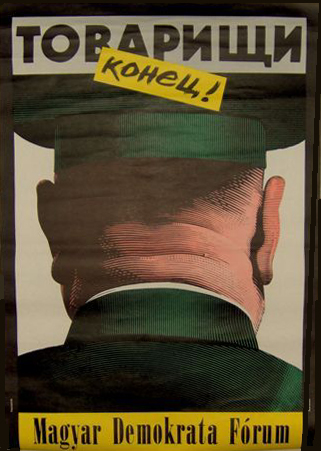
So, we started learning democracy, talking freely about our life, desires or politics. It was very exciting!
And during the years we felt that freedom is great, even if there are difficulties. Unemployment, higher prices, more and more taxes are part of the „package”.
I first studied in high school, later at university, and I was 22 years old when I started working in a village as a teacher. I worked in the afternoon school, and my pupils were 9 years old. It was perfect for me. I had always dreamt of being a teacher. But soon I met a sad and difficult situation.
Unfortnately the war arrived in Serbia. Because we are really close, we saw every evening the arrival of flying corp. And it happened every evening regulary. Airplans and bombs.
I can remember a night when a bomb arrived too close to the Hungarian border the windows of our house trembled, and I was so scared. But not only me, my pupils too. It was very scary to hear small children talking about the war. They told me they wanted to go to the prime minister to ask him to stop the war, and ask for peace. I don’t remember my answer, I just said something to calm them, but it wasn’t easy.
After the long dark days, peace finally returned. I’ve another class now, and my small pupils are 9 years old again. We visited the museum to learn about the revolution of 1848/49, and I am happy because they live freely, and they don’t know war, only peace.
This week we read a poem (National song) from Sándor Petőfi, a great poet of the period of revolution. Just some rymes:
Slaves we have been to this hour,
Our forefathers who fell from power
Fell free and lived as free men will,
On land that was their own to till,
By all the gods of Hungary
We hereby swear,
That we the yoke of slavery
No more shall wear.
Our forefathers who fell from power
Fell free and lived as free men will,
On land that was their own to till,
By all the gods of Hungary
We hereby swear,
That we the yoke of slavery
No more shall wear.
After we talked about what does freedom mean. Some opinions from my pupils:
„ Freedom is when the prisoners get free from prison” (Viki)
„Freedom is when people don’t fight and people are calm” (Alen)
„Freedom is when I can play freely” (Ádám)
„We are free when we can go in the nature and listen to the silence” (Krisztofer)
„I can do what I would really like to do.” (Márk)
I hope my pupils can make their dreams come true, and they’ll be able do what they really want to do in the future. It is my freedom-wish for them.
In closing my post, I would like to share with you some of our photos in the museum, learning about freedom.


Hugs,Mónika
Monday, 5 March 2012
Students' experiences: eTwinning, Comenius.. and lasting on-line friendship
Hello everybody, I'm Lucrezia from Italy.
My European experience has been with eTwinning, in Lower Secondary School.
I think first of all eTwinning has allowed us all to find a school to work with: our Partner Country was Hungary, for the children of other classes the Partner Countries were Spain, Slovakia and Turkey, in previous years there were the Czech Republic, Cyprus, and many others.
We can say that in the last six years, our city has been traveling all the time throughout Europe with eTwinning!
If I were to give a reason why to try eTwinning, I'd say it's fun, it is never boring, and you meet new people and new places.
In our project, "BE TWIN", we worked in pairs with the Hungarian students. In a sense, eTwinning made us feel the subjects we studied as "new" and more engaging; instead of the "normal" lesson, we could use new programs, write on the internet, chat and meet people from other countries.
We also created a facebook page to go on meeting with our partners.
The best part, of course, was to meet them in person.
I think eTwinning for me is also a way to fight shyness, because it teaches us how to speak in foreign languages with people who otherwise we would never have known. We learn not be afraid to turn to someone new, even when it is very far from us.
And then eTwinning is also a way to learn to fend for yourself and solve problems without always going to the teacher, using the computer, your partners' help, and foreign languages. If there is a difficulty, no drama, just work hard... and have fun!
I'm Martina from Italy and I took part in the same project as Lucrezia. We were in the same class in Lower Secondary school and we are together also in "Liceo" as we chose the same High School. I hope we'll have European adventures here too.
One thing I liked in eTwinning is the use of new technologies, working in groups. Three years ago we were already pretty familiar with computers, but then we improved a lot. All the work we did was based on the use of computers in an imaginative and original way. This can be useful to make lessons more enjoyable every day and learn faster.
Our Hungarian partners also won an award for the use of the digital whiteboard.
For us the Municipality, also thanks to our commitment to eTwinning, has managed to create a beautiful and efficient new school, with digital boards in every classroom. This happened because the Mayor has realized and appreciated what we were doing: we had so many contacts in Europe, so we needed appropriate technologies.
My partner in the project was Edit, and we still are friends, we met in October in person, and we meet almost every day on facebook. So, thanks eTwinning!
.jpg) |
| Lucrezia Frati - Martina Spedale students at Liceo Psicopedagogico |
My European experience has been with eTwinning, in Lower Secondary School.
I think first of all eTwinning has allowed us all to find a school to work with: our Partner Country was Hungary, for the children of other classes the Partner Countries were Spain, Slovakia and Turkey, in previous years there were the Czech Republic, Cyprus, and many others.
We can say that in the last six years, our city has been traveling all the time throughout Europe with eTwinning!
If I were to give a reason why to try eTwinning, I'd say it's fun, it is never boring, and you meet new people and new places.
In our project, "BE TWIN", we worked in pairs with the Hungarian students. In a sense, eTwinning made us feel the subjects we studied as "new" and more engaging; instead of the "normal" lesson, we could use new programs, write on the internet, chat and meet people from other countries.
We also created a facebook page to go on meeting with our partners.
The best part, of course, was to meet them in person.
I think eTwinning for me is also a way to fight shyness, because it teaches us how to speak in foreign languages with people who otherwise we would never have known. We learn not be afraid to turn to someone new, even when it is very far from us.
And then eTwinning is also a way to learn to fend for yourself and solve problems without always going to the teacher, using the computer, your partners' help, and foreign languages. If there is a difficulty, no drama, just work hard... and have fun!
---
I'm Martina from Italy and I took part in the same project as Lucrezia. We were in the same class in Lower Secondary school and we are together also in "Liceo" as we chose the same High School. I hope we'll have European adventures here too.
One thing I liked in eTwinning is the use of new technologies, working in groups. Three years ago we were already pretty familiar with computers, but then we improved a lot. All the work we did was based on the use of computers in an imaginative and original way. This can be useful to make lessons more enjoyable every day and learn faster.
Our Hungarian partners also won an award for the use of the digital whiteboard.
For us the Municipality, also thanks to our commitment to eTwinning, has managed to create a beautiful and efficient new school, with digital boards in every classroom. This happened because the Mayor has realized and appreciated what we were doing: we had so many contacts in Europe, so we needed appropriate technologies.
My partner in the project was Edit, and we still are friends, we met in October in person, and we meet almost every day on facebook. So, thanks eTwinning!
---
 |
| Orsolya Csebella |
Hello everybody, I'm Orsolya from Hungary. Together with other students who chose to study Italian at the István Orczy Általános Iskola of Szeged, Hungary. I took part in many eTwinning projects. The one I like most is "BE TWIN – twinning up the everyday lesson”.
In the project’s activities, we used lots of web tools. I liked PhotoFunia for example, to edit photos in a fun way, and Voki to create speaking avatars.
We all have a Twin. My Twin is Lule, Lucrezia.
We wrote letters to each other, created poems and drawings, worked together on google docs, and had fun! Now, after more than three years, we still go on meeting, on eTwinning and on facebook.
My favourite activity was when we wrote a poem together on Friendship. We Hungarians wrote the first part of the poem, and our Italian friends had to finish them.
Thank to the project, we could go the Tiszafüred and Eger camp in Hungary to try out lots of innovative web tools. Later we were invited with our Twins to the Budapest conference. It was very nice to meet and get to know each other in person. We met again last fall when we visited Italy in a Comenius project. I liked meeting Lucrezia and the others again, and spending some time together. I hope I’ll be able to travel again in the future. And I want to go on studying languages.
Hooray for Comenius and eTwinning because that's how we met our friends!
Thursday, 1 March 2012
Why I like eTwinning. Whatever.
I feel this is going to be quite an emotional post. So, if you don’t like the genre, just skip to the next one.
It has to do with how I see myself, as a person and as a teacher. With the ideas I believe in: Europe, cooperation, solidarity, lifelong learning. With the people I love: friends, family, kids. And the people I could love if I knew them. Sorry, I’m not yet to the point where I love ‘people’ in general (beatification has to wait).
I think the whole thing started at school - am I too late for suing my teachers? For they put this idea into my head that I was the citizen of the future, and that I’d have to change the world. And I believed them. I think we all did. So now, when you feel depressed, just think how powerful teachers’ words can be.
 At the same time, we were following the European steps towards the EU. At the Maastricht Treaty we were in our 20es and we dreamt of traveling/studying/working/living all around Europe feeling Europeans. We discovered Erasmus and that was another huge thrill.
What now? Obviously, the world has changed. Despite my teachers’ prediction, I’ve not changed it – which is good, as I can say “not my fault”.
What’s happening to Europe? Why haven’t we gone where we were supposed to go?
Are we doomed to national selfishness? Is it an improved model of selfishness?
And money, is ultimately the answer? Always?
So, I like eTwinning for
 Meanwhile, I’ve been rethinking the whole “changing the world” thing. “World” has a vague meaning, just like “people” in general. Changing things has more to do with interacting and working together with real people you care for.
Ultimately, I like eTwinning for the people I’ve met through it, and for those I will.
And yes, that's my contribution to Europe.
It has to do with how I see myself, as a person and as a teacher. With the ideas I believe in: Europe, cooperation, solidarity, lifelong learning. With the people I love: friends, family, kids. And the people I could love if I knew them. Sorry, I’m not yet to the point where I love ‘people’ in general (beatification has to wait).
I think the whole thing started at school - am I too late for suing my teachers? For they put this idea into my head that I was the citizen of the future, and that I’d have to change the world. And I believed them. I think we all did. So now, when you feel depressed, just think how powerful teachers’ words can be.
Next thing that I know, I was a teenager, and the Cold War was in its final phase. I remember how excited I got at President Michail Gorbačëv and his гла́сность – I hope that’s the right spelling: I actually was so thrilled that I decided to study Russian at University… but my Russian is almost lost by now (while my excitement isn’t at all).
Then, all of a sudden, the 9th of November 1989 and the fall of the Berlin wall: and I thought it was official, I was witness to the beginning of the new world. I’ve sometimes been talking about this with my best friends and we all felt the same. Well, we didn’t actually change the world, let’s say the world had been changed for us. Which was fine. Now, we just had to go on from that point.

What now? Obviously, the world has changed. Despite my teachers’ prediction, I’ve not changed it – which is good, as I can say “not my fault”.
What’s happening to Europe? Why haven’t we gone where we were supposed to go?
Are we doomed to national selfishness? Is it an improved model of selfishness?
And money, is ultimately the answer? Always?
I used to feel a sense of failure for not doing my part. Then – here we come to the title of this crazy post – I realized I’m giving my tiny contribution to push Europe the direction I believe in. I’m doing it through eTwinning. Of course I have to use the tools I have, and as a teacher I chose eTwinning to help my pupils realize Europe really exists, it’s made of real people, and it’s worth their time and efforts.
So, I like eTwinning for
- allowing me and my pupils to meet those people, and feel them as ‘real’
- preventing my pupils from being disappointed (as I was) at not changing the world: for they will, starting by now with writing to their unknown e-pal
- gathering together teachers who still believe in the EU
- showing me how to perform better in my profession through collaboration
- engaging me and my pupils in a learning adventure that can be a lifelong adventure.
Ok, it could be better. There are issues: no money, no official recognition, European and national strategies clashing... they'll have to work on this (whoever this "they" could be).
 Meanwhile, I’ve been rethinking the whole “changing the world” thing. “World” has a vague meaning, just like “people” in general. Changing things has more to do with interacting and working together with real people you care for.
Ultimately, I like eTwinning for the people I’ve met through it, and for those I will.
And yes, that's my contribution to Europe.
Monday, 27 February 2012
Students' experiences: visiting Europe with Legambiente
Here we are with our second student's post. This time, our guest blogger is Sabina Tangorra, who's been traveling all around Europe with the Italian organization Legambiente (League for the Environment), the most widespread environmental organization in Italy. And here's her story...
 |
| Sabina Tangorra - Fine Art Student |
My name is Sabina Tangorra, I'm 22 and I’ve been traveling abroad in the last few years taking part in volunteer camps organized by Legambiente.
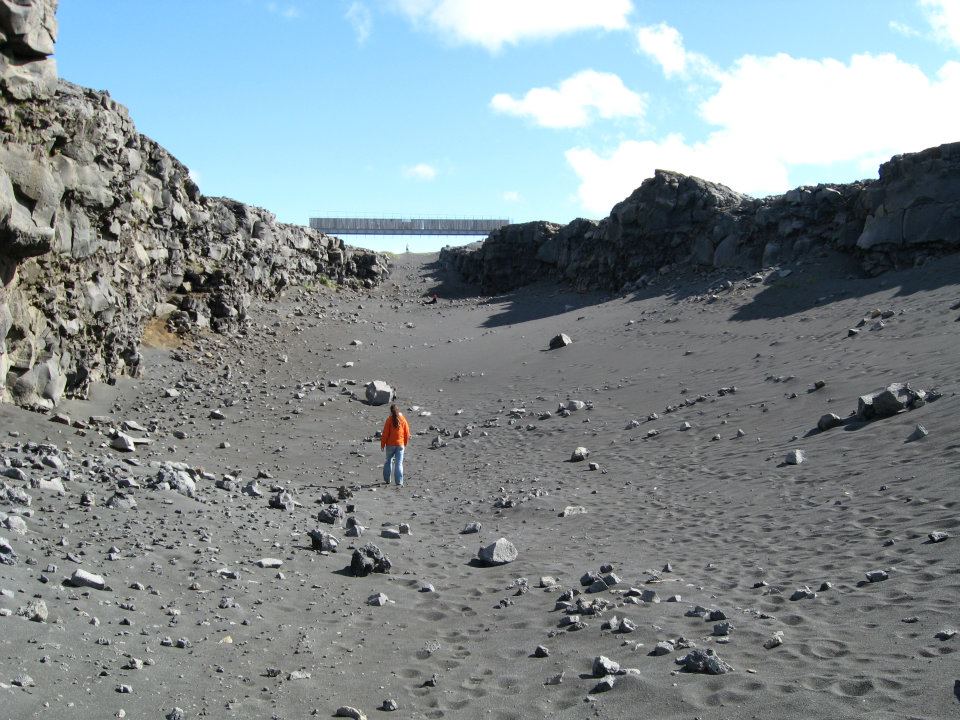
I visited Iceland - Keflavik, Reykjavik, Hafnarfjordur and Geyser, and Estonia - Tallinn and Loksa.
A volunteer work camp is an experience that can last for two or more weeks, in Italy or abroad. It allows you to travel, meet new people, improve language skills and above all enjoy the journey as a socially useful person, not as a simple tourist.
In a volunteer work camp participants share their hours of working, their accomodation and their free time with people coming from different realities and different countries.
 So, you meet people that maybe in your everyday routine you would never have met. And you create very strong bonds, friendships that last a lifetime, and learn many new things.
A Legambiente camp can last from a minimum of 7 to a maximum of 30 days and around 4/6 hours of community work are scheduled during the week from Monday to Friday (social works, such as protection of nature or promotion of a healthy and eco-sustainable lifestyle).

Work hours are very light and rewarding, and you always have free time to explore the area, enabling you to live the volunteer camps as if they were a sort of alternative, but socially productive, holidays.
Food and accommodation are free, while participants have to pay for the journey. You also have to pay a contribution to the Legambiente organization.
In the camps the accomodation is usually in a school closed for holidays, or a guesthouse in the mountains ... it also happens to be hosted by local families.
 |
| in Keflavík |
In 2008 I went to a camp in Iceland (that’s the one I remember with more than nostalgia, as I enjoyed it very much) and for a mistake (that still no one can explain) I and the other 8 people in the group were almost a week without work to be done.
In cases like this you have to look at the bright side of the situation: and ours was that we had plenty of time to visit the area.
Participation in a camp is an experience full of surprises, not all of them positive, but all useful for you personal growth. It is an experience I recommend with all my heart, because it is educational both for yourself as a person (it is not easy to roll up your sleeves and work/speak when no one around you speaks your language) and for interpersonal relationships, because it puts you in direct contact with strangers… that within a few days become your friends and share with you adventures and misadventures of a lifetime!
---
Un campo di volontariato è un’esperienza lavorativa che può durare due o più settimane in Italia o all’estero, ti permette di viaggiare, conoscere persone nuove, migliorare la conoscenza delle lingue e soprattutto vivere il “viaggio” da persona socialmente utile e non da semplice turista.
In un campo di volontariato condividi le ore di lavoro, l’alloggio, il tempo libero con persone provenienti da realtà diverse dalla tua e che magari nella vita di tutti i giorni non avresti incontrato; si creano legami molto forti, amicizie che durano nel tempo e si imparano molte cose nuove.
Un campo di volontariato di Legambiente può durare da un minimo di 7 ad un massimo di 30 giorni e sono previste durante la settimana dal lunedì al venerdì circa 4/6 ore di lavoro socialmente utile (i lavori sono di carattere ambientale, come lavori di sentieristica o promozione di uno stile di vita sano ed eco-sostenibile ).
Il lavoro ha ritmi veramente rilassati e tranquilli e le ore libere per visitare i dintorni sono molte; questo permette di vivere i campi di volontariato come se fossero delle vacanze alternative.
Sono gratuiti il vitto e l’alloggio ma non il viaggio di andata e ritorno dal campo; inoltre per partecipare è necessario versare un contributo di 120 euro a Legambiente ed avere la tessera. Nei campi l’alloggio spesso e volentieri è una scuola chiusa per le feste o una foresteria in mezzo alle montagne … Capita anche di essere ospitati dalle famiglie del posto.
 Purtroppo accade spesso che all’arrivo in un campo di volontariato ci si accorga che quel che è stato scritto nella scheda informativa (soprattutto il lavoro da svolgere) è pura fantasia: mi è capitato spesso di trovarmi “con le mani in mano” perché l’organizzazione del paese ospitante a cui la Legambiente faceva riferimento non sapeva cosa far fare ai volontari …
 Nel 2008 sono andata ad un campo di volontariato in Islanda (è quello che ricordo con più nostalgia, mi sono divertita molto) e per un disguido (che ancora nessuno sa spiegare) io e le altre 8 persone del gruppo siamo rimasti quasi una settimana senza lavoro da svolgere.
In casi del genere conviene vedere i lati positivi della situazione ed il nostro è stato di avere molto tempo a disposizione per visitare la zona.Partecipare ad un campo di volontariato è un’esperienza ricca di sorprese non sempre positive, ma è comunque un’esperienza che consiglio con tutto il cuore, perché è formativa sia per il carattere (non è facile rimboccarsi le maniche ed arrangiarsi quando nessuno intorno a te parla la tua lingua) che per i rapporti interpersonali, perché ti mette a confronto diretto con persone sconosciute che nel giro di pochi giorni diventano tue amiche e condividono con te avventure e sventure.
Wednesday, 22 February 2012
Students' experiences: our first guest blogger
Do you remember our call for contributors of last January? Well, here's our first guest blogger. So, let's welcome Fabióla!
My name is Fabióla Csuka, I’m twenty years old and I come from Hungary.
I started studying Italian in my elementary school in Szeged. This school is István Orczy Elementary School. There was a study group once a week. In this study group I learned the basics of the language, we studied Italian songs, the alphabet, the numbers, the first simple things. With this knowledge I could study Italian in secondary school very easily.
In elementary, and secondary school too, there were competitions, where we could meet other students. Yearly there was a nationwide competition, where I entered for the category of poem, but there were other categories. In my elementary school every year there was the competition of Gianni Rodari, it was a tradition. Students of the schools of Szeged took part in this competition.
In this school we started an eTwinning project, called „Sharing our world – Condividere il mondo”, with the Italian school “Arnolfo di Cambio”. It was very funny, because we exchanged letters and emails with Italian students. It was a very big adventure, because we could practice the language with real Italian people. I studied and it was a very good feeling that I had Italian friends.

In my elementary school there was an opportunity to go to Italy several times, and it was very important in my life, because I could see the country, the people, the culture, and I could practice the language. At first it was very difficult to speak in Italian, but after the first success I became more courageous, and I was very happy when people understood me.
At this moment I decided that I want study in Italian at the University, too. I liked the people, the country, the temperament of the country, and I was sure that I want to deal with the Italian language later, too.
Once we also could go to Switzerland, it was a great experience. In Switzerland I could use the Italian language again, yet more easily.
Then in the secondary school I could go on with the study of the italian language, already three times a week. It was simple with my knowledge, and I didn’t need to start again. Every year I entered for the nationwide Italian competiton, called the Festival d’Italiano, in the category of prose. It was easier with the experience that I had in the competitions in my elementary school. Once I won this competition, and I was recognised by a lot people.
Now I am studying at the University of Szeged from September, in the Italian department. It’s very good, I enjoy it! I would like to study in Bologna with the Erasmus programme. It would be fantastic, because I could live nearly one year in Italy, I will deeply know the country, the culture, the traditions. I will meet a lot of Italian people, and I ’ll be able to use the language.
I can’t wait!
Az Orczy István Általános Iskolában kezdtem el olaszul tanulni, Szegeden. Heti egy órában, szakkör keretein belül, ahol a nyelv alapjait tudtam elsajátítani.
Minden évben megrendezte az iskola a Gianni Rodari versenyt, amely egy hagyomány volt, és szegedi diákok vettek részt rajta. Ezen kívül évente megrendeztek egy országos versenyt, ahová az ország minden részéből érkeztek diákok. Én vers kategóriában indultam ezeken a versenyeken.
Az iskolával bekapcsolódtunk az eTwinning programba is, a mi akkori programunk neve Sharing our world – Condividere il mondo volt, és az Arnolfo di Cambio nevű olasz iskolával álltunk kapcsolatban. Ez nagyon jó volt, mert olasz diákokkal tudtunk levelezni, így is gyakorolva a nyelvet, és igazán jó érzés volt, hogy vannak olasz barátaink.
Többször volt lehetőségünk eljutni Olaszországba, ami mindig hatalmas élmény volt. Először nem volt könnyű megszólalni, de az első sikerek után egyre bátrabb lettem, és igazán boldog voltam, amikor megértették az emberek, amit mondani akartam. Megismerhettük magát az országot, láthattuk az embereket, a kultúrába bepillanthattunk. Ekkor döntöttem el, hogy olaszul szeretnék tanulni az egyetemen is később.
Megtetszettek az emberek, az ország, a temperamentum, és biztos voltam benne, hogy az olasz az, amivel később is foglalkozni szeretnék.
Egyszer eljutottunk Svájcba is, ami szintén remek lehetőség volt arra, hogy használjuk a nyelvet, immár sokkal könnyebben.
A középiskolában folytattam az olasz nyelv tanulását, és szerencsére nem kellett mindent elölről kezdenem a megszerzett alapoknak köszönhetően. Szintén évente rendezték meg az országos olasz versenyt, melynek neve Festival d’Italiano. Minden évben elindultam rajta, próza kategóriában, amely nem volt olyan nehéz az általános iskolában gyűjtött tapasztalatoknak köszönhetően.
Most a Szegedi Tudományegyetem olasz szakán tanulok szeptember óta. Erasmus programmal szeretnék egy évet Bolognában tanulni. Ez nagyon jó lesz, mivel majdnem egy évig fogok Olaszországban élni, igazán megismerhetem az országot, az embereket, a kultúrát. Rengeteg lehetőségem lesz, hogy gyakoroljam a nyelvet az olasz diákokkal. Már nagyon várom!
 |
| Fabióla Csuka - University student |
I started studying Italian in my elementary school in Szeged. This school is István Orczy Elementary School. There was a study group once a week. In this study group I learned the basics of the language, we studied Italian songs, the alphabet, the numbers, the first simple things. With this knowledge I could study Italian in secondary school very easily.
In elementary, and secondary school too, there were competitions, where we could meet other students. Yearly there was a nationwide competition, where I entered for the category of poem, but there were other categories. In my elementary school every year there was the competition of Gianni Rodari, it was a tradition. Students of the schools of Szeged took part in this competition.
In this school we started an eTwinning project, called „Sharing our world – Condividere il mondo”, with the Italian school “Arnolfo di Cambio”. It was very funny, because we exchanged letters and emails with Italian students. It was a very big adventure, because we could practice the language with real Italian people. I studied and it was a very good feeling that I had Italian friends.

In my elementary school there was an opportunity to go to Italy several times, and it was very important in my life, because I could see the country, the people, the culture, and I could practice the language. At first it was very difficult to speak in Italian, but after the first success I became more courageous, and I was very happy when people understood me.
At this moment I decided that I want study in Italian at the University, too. I liked the people, the country, the temperament of the country, and I was sure that I want to deal with the Italian language later, too.
Once we also could go to Switzerland, it was a great experience. In Switzerland I could use the Italian language again, yet more easily.
Then in the secondary school I could go on with the study of the italian language, already three times a week. It was simple with my knowledge, and I didn’t need to start again. Every year I entered for the nationwide Italian competiton, called the Festival d’Italiano, in the category of prose. It was easier with the experience that I had in the competitions in my elementary school. Once I won this competition, and I was recognised by a lot people.
Now I am studying at the University of Szeged from September, in the Italian department. It’s very good, I enjoy it! I would like to study in Bologna with the Erasmus programme. It would be fantastic, because I could live nearly one year in Italy, I will deeply know the country, the culture, the traditions. I will meet a lot of Italian people, and I ’ll be able to use the language.
I can’t wait!
---
Az Orczy István Általános Iskolában kezdtem el olaszul tanulni, Szegeden. Heti egy órában, szakkör keretein belül, ahol a nyelv alapjait tudtam elsajátítani.
Minden évben megrendezte az iskola a Gianni Rodari versenyt, amely egy hagyomány volt, és szegedi diákok vettek részt rajta. Ezen kívül évente megrendeztek egy országos versenyt, ahová az ország minden részéből érkeztek diákok. Én vers kategóriában indultam ezeken a versenyeken.
Az iskolával bekapcsolódtunk az eTwinning programba is, a mi akkori programunk neve Sharing our world – Condividere il mondo volt, és az Arnolfo di Cambio nevű olasz iskolával álltunk kapcsolatban. Ez nagyon jó volt, mert olasz diákokkal tudtunk levelezni, így is gyakorolva a nyelvet, és igazán jó érzés volt, hogy vannak olasz barátaink.
Többször volt lehetőségünk eljutni Olaszországba, ami mindig hatalmas élmény volt. Először nem volt könnyű megszólalni, de az első sikerek után egyre bátrabb lettem, és igazán boldog voltam, amikor megértették az emberek, amit mondani akartam. Megismerhettük magát az országot, láthattuk az embereket, a kultúrába bepillanthattunk. Ekkor döntöttem el, hogy olaszul szeretnék tanulni az egyetemen is később.
Megtetszettek az emberek, az ország, a temperamentum, és biztos voltam benne, hogy az olasz az, amivel később is foglalkozni szeretnék.
Egyszer eljutottunk Svájcba is, ami szintén remek lehetőség volt arra, hogy használjuk a nyelvet, immár sokkal könnyebben.
A középiskolában folytattam az olasz nyelv tanulását, és szerencsére nem kellett mindent elölről kezdenem a megszerzett alapoknak köszönhetően. Szintén évente rendezték meg az országos olasz versenyt, melynek neve Festival d’Italiano. Minden évben elindultam rajta, próza kategóriában, amely nem volt olyan nehéz az általános iskolában gyűjtött tapasztalatoknak köszönhetően.
Most a Szegedi Tudományegyetem olasz szakán tanulok szeptember óta. Erasmus programmal szeretnék egy évet Bolognában tanulni. Ez nagyon jó lesz, mivel majdnem egy évig fogok Olaszországban élni, igazán megismerhetem az országot, az embereket, a kultúrát. Rengeteg lehetőségem lesz, hogy gyakoroljam a nyelvet az olasz diákokkal. Már nagyon várom!
Saturday, 28 January 2012
LOOKING FOR CONTRIBUTORS: High School/university students, young workers
Let's look at the other side of the coin...
We've been talking a lot about CLIL and cooperation programmes from the teachers' point of view.
We all agree Comenius, Grundtvig, eTwinning and all related actions are crucial for our professional development and we believe they motivate and engage our students with a positive impact on their competences. True. Or is it?
I mean, we want to think the effect is what we planned. But are we sure? How are these experiences seen (and lived) by the students? What do they think? What's the impact of these actions on their lives?
 The best way to know is ask the main actors of cooperation projects: students.
That's why we are looking for "guest posts" written by High School students, University students and young workers who had the opportunity to live any kind of cooperation experience in the UE and beyond.
How to apply:
And for all our fellow teachers... why don't you ask your students to share with us their experiences?

Looking forward to get to know more...
We've been talking a lot about CLIL and cooperation programmes from the teachers' point of view.
We all agree Comenius, Grundtvig, eTwinning and all related actions are crucial for our professional development and we believe they motivate and engage our students with a positive impact on their competences. True. Or is it?
I mean, we want to think the effect is what we planned. But are we sure? How are these experiences seen (and lived) by the students? What do they think? What's the impact of these actions on their lives?
That's why we are looking for "guest posts" written by High School students, University students and young workers who had the opportunity to live any kind of cooperation experience in the UE and beyond.
How to apply:
- posts must be limited to 500/600 words (images welcome if not copyright protected) - all of EU languages are welcome
- content of articles is at the discretion of the eContributor, as long as it deals with international work/study experiences
- please forward your contribution along with a short resume about yourself (not a curriculum vitae, just few lines so that we know who you are!) to laura_maffei@yahoo.com or kiss.mnika76@gmail.com
- you will be given access info to publish the article yourself
- deadline for submission: February the 26th
And for all our fellow teachers... why don't you ask your students to share with us their experiences?

Looking forward to get to know more...
[to be continued...]
Friday, 20 January 2012
bye bye Comenius - introducing Erasmus for All
Erasmus for All is the new EU programme for education, training, youth and sport proposed by the European Commission on 23 November 2011.
Let's say bye bye to Comenius, Grundtvig, Leonardo da Vinci and all of these actions: the European Commission decided to stop using the different existing names of mobility programmes and gather all of them under the widely recognised "brand" of Erasmus - a name strongly associated with learning abroad and European cooperation. It's obviously considered to be a name that markets itself and could work as a sort of advertisement for the whole programme.
You can read more about this new action, including FAQs, key figures, and a short video presentation, at the European Commission - Education and Training website.
But - naming apart - what changes will be introduced by this new programme?
Difficult to say. Let's listen to the European Commissioner Androulla Vassiliou, who presented Erasmus for All and Creative Europe programmes, during a press conference in Brussels at the end of November.
Of course, we're just at the beginning of this new European journey and we can't judge something that is not even born. And please remember, this is just my very personal opinion. Anyway, I'm not sure that "financial austerity which all member states face" can be considered enough to describe what we are living now in Italy, Greece, and lots of European countries. And it's not enough to explain the crisis of the EU as a whole, the progressive lack of confidence and trust of common people, students and teachers and workers, European citizens - lack of trust in their national governments first, and then in the EU as an ideal, as a common cause.
I'm happy to know the EU is still willing to invest on the future - on learning, on youth - and I'm happy to know despite the crisis there will be a larger amount of money to support mobilities. People traveling, studying, working and having experiences abroad will help raise awareness about the importance of a strong, consistent, European Union.
But unfortunately, in my opinion, this is not enough. The educational world cannot fight on its own to keep Europe together, when European politicians fight each other every day to keep their countries apart.
Who knows, maybe next programme should be called "Less Selfishness for All"...
Let's say bye bye to Comenius, Grundtvig, Leonardo da Vinci and all of these actions: the European Commission decided to stop using the different existing names of mobility programmes and gather all of them under the widely recognised "brand" of Erasmus - a name strongly associated with learning abroad and European cooperation. It's obviously considered to be a name that markets itself and could work as a sort of advertisement for the whole programme.
You can read more about this new action, including FAQs, key figures, and a short video presentation, at the European Commission - Education and Training website.
But - naming apart - what changes will be introduced by this new programme?
Difficult to say. Let's listen to the European Commissioner Androulla Vassiliou, who presented Erasmus for All and Creative Europe programmes, during a press conference in Brussels at the end of November.
Of course, we're just at the beginning of this new European journey and we can't judge something that is not even born. And please remember, this is just my very personal opinion. Anyway, I'm not sure that "financial austerity which all member states face" can be considered enough to describe what we are living now in Italy, Greece, and lots of European countries. And it's not enough to explain the crisis of the EU as a whole, the progressive lack of confidence and trust of common people, students and teachers and workers, European citizens - lack of trust in their national governments first, and then in the EU as an ideal, as a common cause.
I'm happy to know the EU is still willing to invest on the future - on learning, on youth - and I'm happy to know despite the crisis there will be a larger amount of money to support mobilities. People traveling, studying, working and having experiences abroad will help raise awareness about the importance of a strong, consistent, European Union.
But unfortunately, in my opinion, this is not enough. The educational world cannot fight on its own to keep Europe together, when European politicians fight each other every day to keep their countries apart.
Who knows, maybe next programme should be called "Less Selfishness for All"...
Subscribe to:
Posts (Atom)